- All
- Product Name
- Product Keyword
- Product Model
- Product Summary
- Product Description
- Multi Field Search


Views: 88 Author: Site Editor Publish Time: 2026-01-07 Origin: Site


Type of Crusher | Common Applications |
|---|---|
Jaw Crushers | Quarries, demolition recycling, portable on-site setups |
Gyratory Crushers | Primary crushing for hard rock, metallic ore, large-scale aggregate production |
You can use this chart to help pick the best crusher for your job.
Choose a gyratory crusher for large jobs with hard rock. It handles big loads and crushes efficiently.
Select a jaw crusher for smaller jobs or portable work. It is easy to move and set up on-site.
Consider the type of material you need to crush. Gyratory crushers work best with tough materials, while jaw crushers suit softer rocks.
Think about your site conditions. Jaw crushers fit in tight spaces and are easier to install in underground locations.
Use the decision checklist in the blog to match your job needs with the right crusher type for better efficiency.
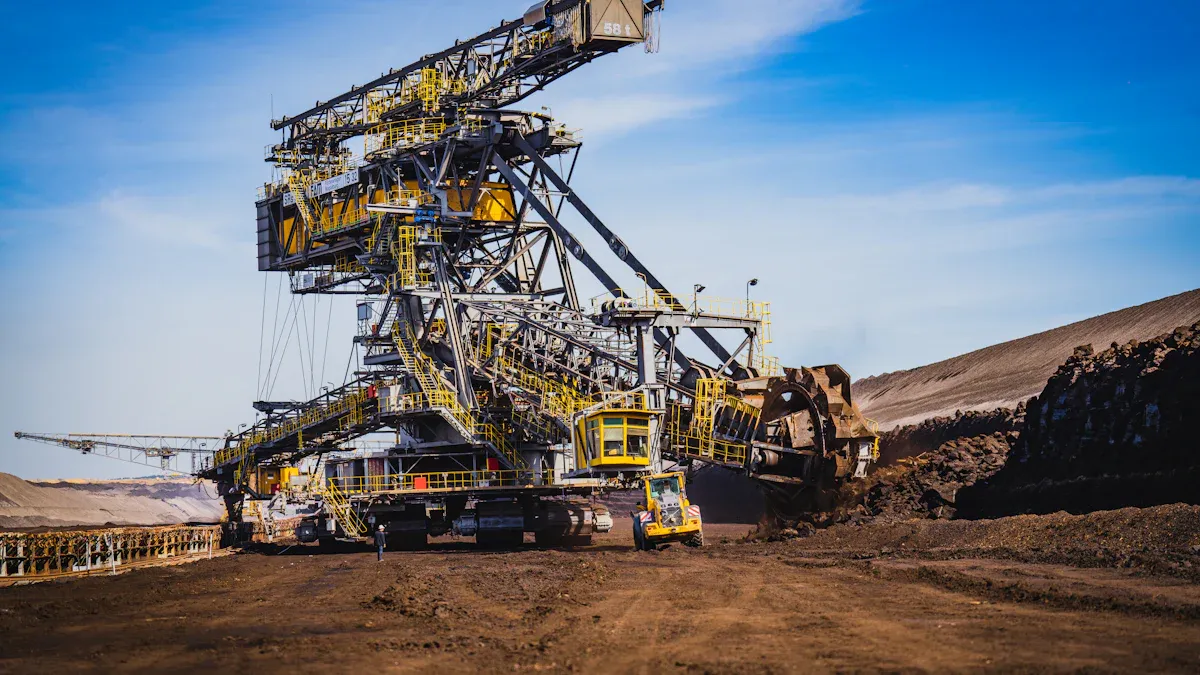
A gyratory crusher crushes rocks in a special way. The main shaft spins in a circle inside a strong shell. The crushing head moves close to the shell, then moves away. Rocks get squeezed and break when the head moves. Crushing happens all the time, not just once.
The gyratory crusher crushes as the head goes up and down.
You can keep the bowl full for better work.
The design lets you use rocks of many shapes, even flat ones that jaw crushers cannot crush.
The shell is made from thick steel for strength. The mantle covers the head and is made from hard manganese steel. This part gets tighter as the crusher works.
Tip: Keep the feed chamber full for best results with your gyratory crusher.
A gyratory crusher is great for tough jobs. It can crush big rocks and handle lots of material. You can use it in places where you need to crush hard things.
Metal mining: Use a gyratory crusher for copper, gold, and iron ore.
Aggregate production: It works well in large plants for granite, basalt, or limestone.
Cement making: Crush limestone and other materials for cement.
Big projects: The gyratory crusher helps build dams, roads, and railways by making strong base materials.
Pick a gyratory crusher if you need to crush lots of hard rock or run a big job. The design gives steady crushing and handles hard work with fewer problems.
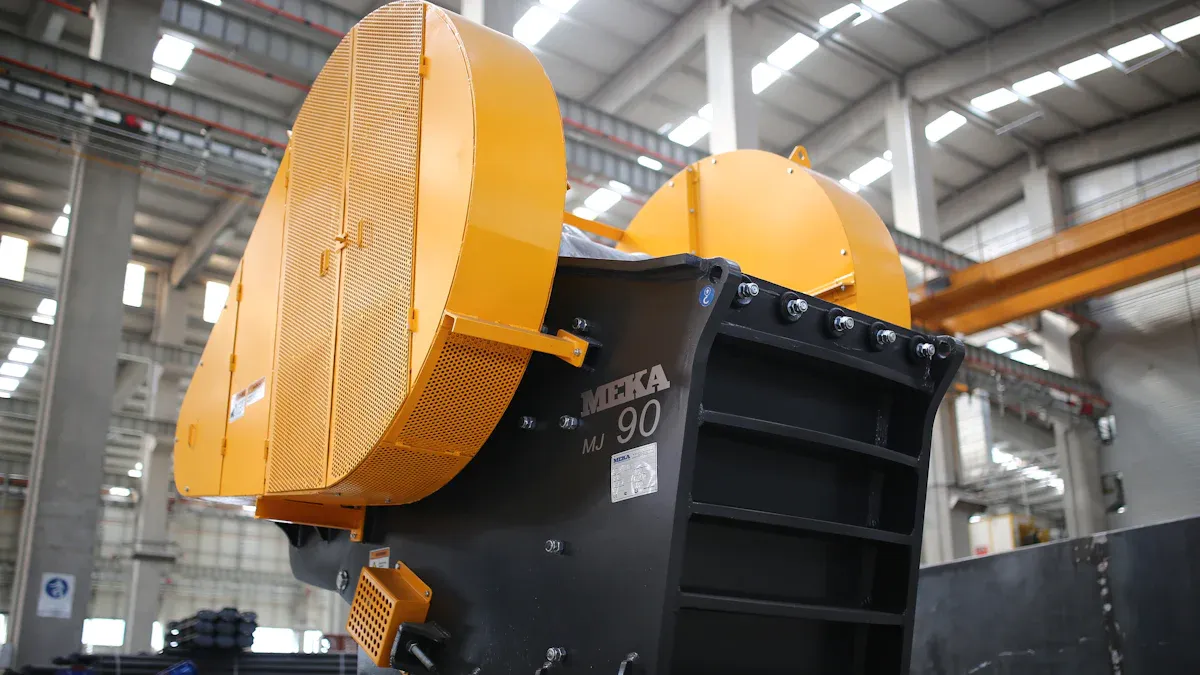
A jaw crusher breaks rocks in a simple way. It has two jaws. One jaw does not move. The other jaw moves back and forth. The moving jaw pushes rocks against the still jaw. This crushes the rocks.
The jaw crusher uses compression to break rocks. The rocks get squeezed between the jaws until they break.
The jaw moves because of an eccentric shaft and a toggle plate. The jaw moves in a circle and rocks back and forth.
The place where you put rocks is shaped like an oval. The area where rocks come out looks like a crescent that points up.
You can pick single toggle or double toggle designs. Each design moves the jaw in a different way and handles rocks differently.
The jaw moves in a steady rhythm. This keeps the crusher working without stopping.
Tip: Check the jaw plates often. If the plates wear out, the crusher will not work as well and will be slower.
A jaw crusher helps with many kinds of jobs. You can use it in mining, building, and recycling.
Mining uses jaw crushers to break big pieces of ore into smaller ones.
Coal plants use jaw crushers to make coal the right size for moving and making power.
Quarries need jaw crushers to crush big stones for building.
Making aggregates uses jaw crushers to crush limestone and granite for concrete and roads.
Building sites use jaw crushers to crush concrete, asphalt, and old building parts.
Recycling centers use jaw crushers to get useful materials from waste.
A jaw crusher is good for portable jobs and work at the site. The design makes it easy to move and set up. You can crush many kinds of rocks, hard or soft. The jaw crusher works well and is easy to take care of.
Think about how much you need to crush each hour. A gyratory crusher can crush more than a jaw crusher. If you work in a big mine or need to crush thousands of tons, use a gyratory crusher. A jaw crusher is better for small jobs and less material.
Crusher Type | Average Throughput Capacity (tons per hour) |
|---|---|
1 – 1,000 | |
Gyratory Crusher | 1,000 – 5,000+ |
Tip: Use a gyratory crusher for big jobs. Pick a jaw crusher for small or portable work.
Look at the size and type of rocks you want to crush. The gyratory crusher takes bigger rocks and works best with hard, rough stones. This makes it good for big mining jobs. The jaw crusher takes smaller rocks and works well with medium-hard or breakable stones. It fits small jobs or softer rocks.
Crusher Type | Capacity Handling | Ideal Use Case |
|---|---|---|
Gyratory Crusher | Can handle larger feed sizes | Large mining operations |
Jaw Crusher | Generally has a lower capacity | Smaller operations or less abrasive materials |
Jaw crushers are good for tough jobs in quarries and for crushing hard stones.
Gyratory crushers work best with rocks that are very strong.
You may want to know what the crushed rocks look like. The size and shape matter for how you use them. Both crushers let you change the size, but the results are different. A gyratory crusher makes even pieces with fewer needle shapes. The jaw crusher often makes flat or sharp pieces, and more than 20% may have a bad shape.
Crusher Type | Product Shape Characteristics |
|---|---|
Jaw Crusher | Makes mostly flat, sharp, or pointy pieces, with over 20% having a poor shape. |
Gyratory Crusher | Makes even pieces with few needle shapes, usually less than 10%. |
Note: If you need better shapes for concrete or roads, the gyratory crusher is better.
Think about how much power your crusher needs. The gyratory crusher uses less energy because it crushes all the time. The jaw crusher uses more energy since it crushes in short bursts. If you want to save power, the gyratory crusher is better.
Crusher Type | Energy Efficiency |
|---|---|
Gyratory Crusher | Uses less energy |
Jaw Crusher | Uses more energy because it stops and starts |
You want your crusher to keep working. The gyratory crusher runs all the time and has smart features like oiling and remote checks. These help stop breakdowns and keep it working longer. Regular care, like changing oil and checking parts, helps it last. The jaw crusher does not have as many smart features, so it may stop more often and not last as long.
Tip: For big jobs, the gyratory crusher is more reliable and works longer.
Think about how much it costs to run your crusher. The gyratory crusher costs more to buy and set up, but it saves money later with less power use and fewer stops. The jaw crusher costs less at first and is easier to move, but you may pay more for power and repairs if you use it for big jobs.
Gyratory crushers cost more at first but save money later.
Jaw crushers cost less at first but may cost more for power and fixing in hard jobs.
If you want the best deal for big, tough jobs, the gyratory crusher is better. For small or moving jobs, the jaw crusher may be best, even with some downsides.
Think about where you want to put your crusher. Gyratory crushers are big and heavy. They need a strong base to stand on. Jaw crushers are smaller and fit in tight places. You can put jaw crushers together in pieces. This helps if you work underground or far away. It is easier to move and set up jaw crushers. You might pay more to install them. But jaw crushers usually cost less to keep working.
Tip: If you do not have much space or work underground, a jaw crusher may be a better choice.
You may need to move your crusher if your job changes. Jaw crushers are made in pieces from strong metal. You can take them apart and move them. This makes jaw crushers good for underground or far away jobs. Some crushers have wheels or tracks to help them move. Not all crushers are easy to move. You should check if your crusher can be moved without problems.
Jaw crushers come in pieces for easy moving.
Jaw crushers are good for underground work.
Mobile crushers use wheels or tracks to move.
Some mobile crushers are not truly portable, just easier to move.
Note: Jaw crushers are easy to move, but they may cost more to install.
Think about dust and noise at your site. Jaw crushers make more dust because of how they work. Gyratory crushers make less dust since they are fed full. If dust is a problem, a gyratory crusher may help keep the air clean.
Crusher Type | Dust Emissions Comparison | Noise Emissions Comparison |
|---|---|---|
Jaw Crushers | Make more dust | Not specified |
Gyratory Crushers | Make less dust when fed full | Not specified |
Tip: Use water or covers to help lower dust at your site.
You should also check if your crusher shakes the ground too much. Gyratory crushers are heavier and may shake more. Jaw crushers are lighter and may be better for places with strict rules.
Gyratory crushers work well for big jobs. They can crush a lot of rock fast. You get good value for your money. These machines crush slabby materials easily. It is easy to take care of them. You do not need to spend much on the base. Lubrication is simple and cheap.
Here are the main points:
Advantages of Gyratory Crushers | Disadvantages of Gyratory Crushers |
|---|---|
High capacity per dollar of investment | Higher costs for extra strength in design |
Effective handling of slabby materials | |
Simpler maintenance | |
Lower cost of foundation | |
Lubrication is simpler and more economical |
Note: Pick a gyratory crusher if you need to crush lots of hard rock. It gives steady and reliable work.
Jaw crushers have a simple design. They are easy to use. You can use them for many jobs. They help make rocks smaller. They do not cost much to run. Jaw crushers last a long time. They fit in many places.
Here is a summary:
Advantages | Disadvantages |
|---|---|
Efficient Size Reduction | Size Limitation |
Simple Design | Maintenance Requirements |
Versatility | Inefficient at Fine Crushing |
Durability | Energy Consumption |
Low Operational Costs | Noise and Dust |
Limited Mobility | |
Uniformity of Product |
Tip: Choose a jaw crusher for small jobs or portable work. It is easy to move and take care of.
Each crusher has good and bad sides. Your choice depends on your job, the material, and your site.
You face different situations when picking a crusher. Each job has its own needs. Here are some common scenarios:
Large Mining Operation
You work with hard rock or metal ore. You need to crush thousands of tons each day. A gyratory crusher fits this job. It handles big loads and tough materials.
Small Quarry or Construction Site
You need a crusher that moves easily. You work with smaller stones or recycled concrete. A jaw crusher works well here. You can set it up fast and move it when needed.
Underground Mining
You have limited space. You need a crusher that fits in tight spots. A jaw crusher is a good choice. You can install it in pieces and move it underground.
Aggregate Production for Roads
You want rocks with a good shape for concrete or asphalt. A gyratory crusher gives you even pieces. Your project needs high-quality material.
Tip: Match your crusher to your job size, material type, and site limits. This helps you save time and money.
Use this checklist to help you choose the right crusher for your job:
Question | Jaw Crusher | Gyratory Crusher |
|---|---|---|
Do you need high capacity? | ❌ | ✅ |
Is your site small or underground? | ✅ | ❌ |
Do you need easy setup and mobility? | ✅ | ❌ |
Are you crushing very hard materials? | ❌ | ✅ |
Is product shape important? | ❌ | ✅ |
Is your budget limited for equipment? | ✅ | ❌ |
Check your answers in the table.
If you see more check marks under one crusher, that type fits your needs.
You can talk to a supplier for more help.
️ Quick Tip: Write down your job needs before you choose. This makes your decision easier.
You have learned that picking a gyratory crusher or a jaw crusher depends on your job. If you need to crush a lot of hard material, use a gyratory crusher. If your job is small or you need to move the crusher, use a jaw crusher. Think about these things:
How hard, wet, or big the material is
How much space you have and how your site is set up
How much you need to crush and what shape you want
Check the decision checklist above. It will help you choose the right crusher. This way, you can work better and not make expensive mistakes.
You will see the main difference in how they crush rocks. A jaw crusher uses two jaws to squeeze material. A gyratory crusher uses a spinning cone inside a shell to crush rocks all the time.
You will find jaw crushers easier to maintain. You can check and replace jaw plates quickly. Gyratory crushers need more time for maintenance because of their size and design.
You can use a jaw crusher for hard rocks, but it works best for medium-hard materials. For very hard rocks, you should choose a gyratory crusher. It handles tough jobs better.
Make a checklist of your needs:
Material hardness
Site space
Capacity required
Mobility needs
Budget
You can match your answers to the decision checklist in this blog.


