- All
- Product Name
- Product Keyword
- Product Model
- Product Summary
- Product Description
- Multi Field Search


Views: 99 Author: Site Editor Publish Time: 2026-01-17 Origin: Site


Gyratory crushers break big rocks into small pieces. They are important for mining and quarry work.
You need to check the mantle and concaves often. This helps the gyratory crusher last longer.
New gyratory crushers use smart controls and strong materials. These changes save energy and lower costs.
Pick the right gyratory crusher for your material and job. This helps it work well and saves money.
Gyratory crushers have safety parts like hydraulic overload protection. These keep workers safe and help stop accidents.
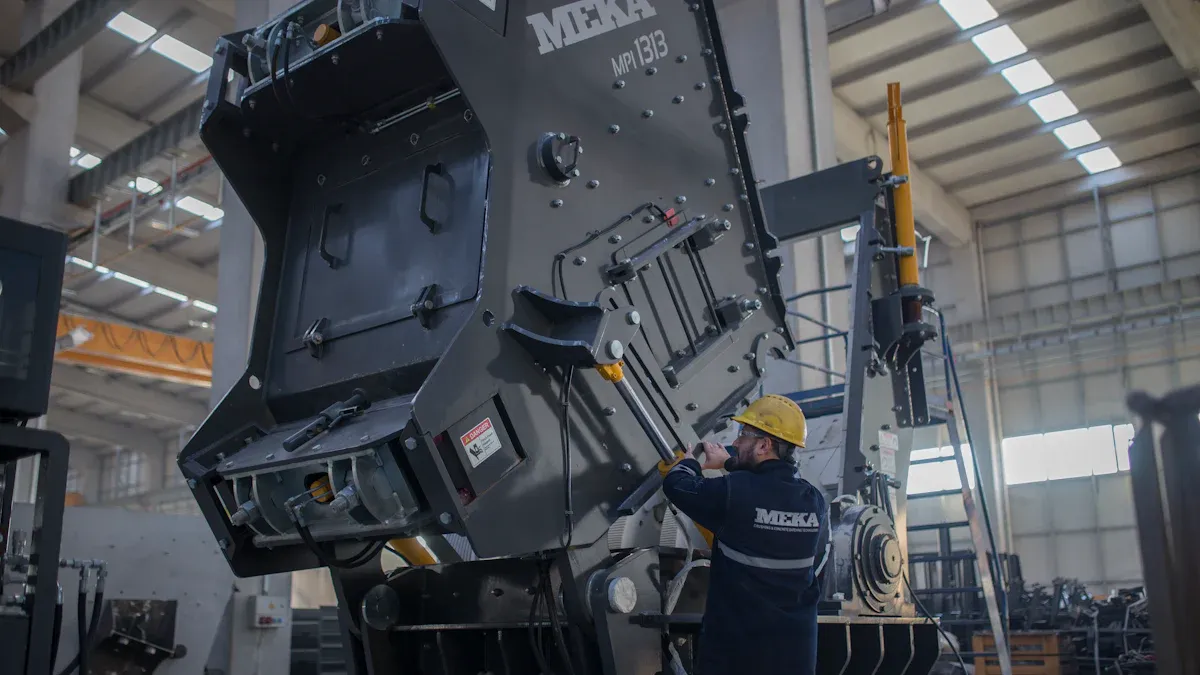
When you look at a gyratory crusher, you notice many parts. These parts work together to crush big rocks. Each part helps the machine run smoothly. Here are the main gyratory crusher components:
Spider assembly and bushing
Top and bottom shell assemblies
Main shaft
Mantle and concaves
Eccentric drive and bushing
Pinion and countershaft assembly
Hydroset assembly (hydraulic support)
The mantle sits inside and pushes rocks against the concave. The mantle and concaves face a lot of pressure and wear. The spider assembly holds up the mantle and takes the crushing force. The eccentric drive makes the mantle move in a circle. The drive assembly gives power to the whole machine. Every part is important for high gyratory crusher capacity and reliable work.
Tip: To help your gyratory crusher last longer, check the wear on the mantle and concaves. This lets you find problems early and keep crushing strong.
You see the conical head moving inside a still bowl. This design is special because it lets the gyratory crusher crush all the time. Material comes in from the top and drops into the crushing area. The mantle moves and squeezes rocks against the concave. Gravity pulls new material down and pushes crushed pieces out. This keeps the crushing going and gives high gyratory crusher capacity.
The shape of the head and bowl helps with big ROM rocks. You do not need to stop and reload the crusher a lot. The design keeps things smooth and efficient.
The frame uses strong iron or steel. This makes the machine tough for hard jobs. The frame holds all the other parts and keeps the crusher steady. The main shaft is also very important. It holds the mantle and helps it move right. The shaft must be strong so it does not bend or break.
Modern gyratory crushers use better materials for the frame and shaft. This helps the machine last longer and work better. New designs make fixing the machine easier and safer. Some crushers let you reach parts from above, so you fix things faster.
Note: Upgrading the frame and shaft can make the crusher work better and stop less. You save money and keep your gyratory crusher running well.
You see new features in gyratory crushers that make them better:
Enhanced automation for easier control
Advanced materials for better durability
Improved energy efficiency
IoT technology for real-time monitoring and predictive maintenance
Quick access to key parts for faster repairs
Lower operational costs and reduced downtime
These upgrades help you get more from your gyratory crusher. You can see 15-20% more throughput and up to 30% less energy use. Better care and smart upgrades keep your gyratory crusher capacity high and make your equipment last longer.
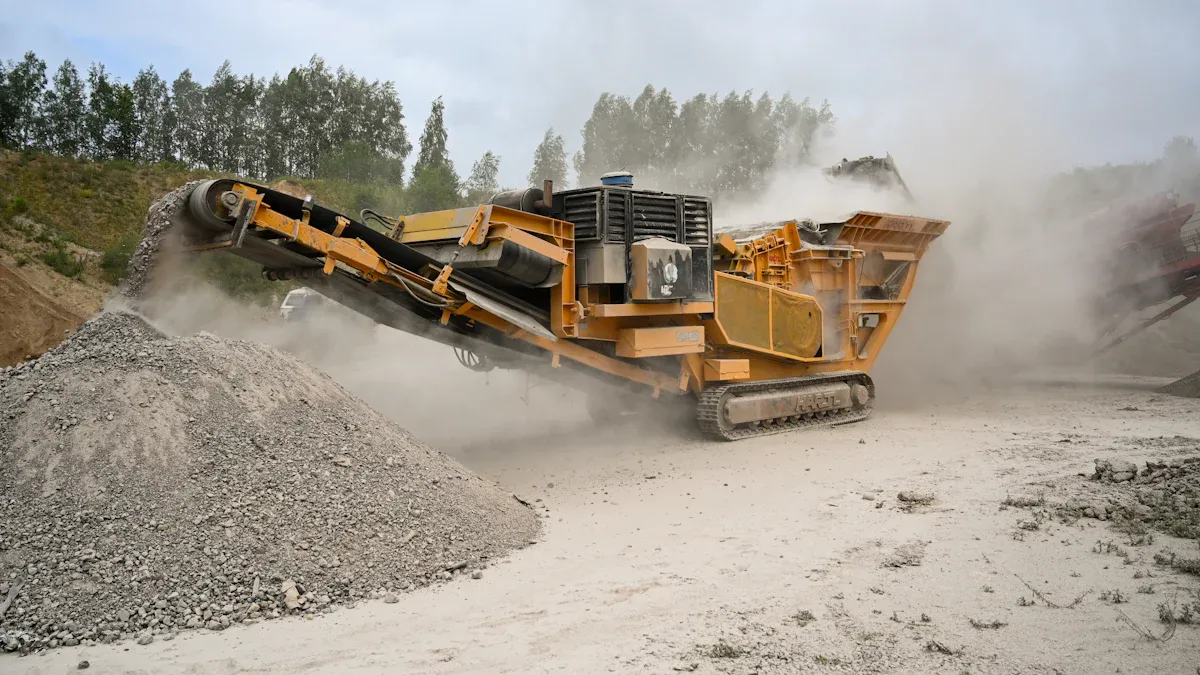
You see the heart of gyratory crushers in the way they crush rocks. The conical head sits inside a stationary bowl. An eccentric assembly, which includes a shaft and a bronze bushing, makes the head move in a circular path. A motor drives this motion with the help of a bevel gear. As the head moves, it presses large rocks against the concave surface. This action breaks the rocks into smaller pieces. The crushing process happens all the time, so you get a steady flow of material. You do not need to stop and reload often. This design helps you handle tough jobs in mining and crushing and milling plants.
Tip: The continuous gyrating motion means you can process more material in less time. This keeps your operation running smoothly and boosts performance.
Gyratory crushers use centrifugal force to make crushing more efficient. When the head spins at high speed, it creates a strong outward force. This force pushes rocks against the bowl and helps grind them down. You get these benefits from centrifugal force:
The high-speed rotation grinds rocks and ore quickly.
The design uses centrifugal force to crush even the hardest materials.
You see less wear on the machine because the force spreads out the pressure.
Centrifugal force is key to the success of gyratory crusher operation. It lets you crush large rocks with less effort and keeps the crusher working longer.
You need to follow the right steps to get the best results from your gyratory crushers. Start by checking the oil temperature. Make sure the tank oil stays between 30–32°C (86–90°F). Turn on the lubrication pump to get oil flowing. Start the crusher drive and let it reach full speed. Run the machine empty until the return oil gets to at least 18°C (65°F). Only then should you begin feeding material into the crusher.
Once you start feeding, rocks enter from the top and move down into the crushing chamber. The gyratory motion breaks them into smaller pieces. Crushed material falls out through the bottom opening. You must watch for any buildup or blockages, especially if you work with wet or sticky ore. Keep the discharge area clear so material flows out easily.
To keep your gyratory running well, check these things often:
Clear any material buildup on the crusher arms.
Inspect the mantle, concaves, and arm guards for wear.
Look for oil leaks.
Watch the discharge area for obstructions.
Check weightometers, pull cords, and metal detectors.
Inspect belts, rollers, and discharge chutes.
Maintain feeders and dust suppression systems.
Note: If you face problems like excessive downtime, poor maintenance access, or structural vibrations, your operation may slow down. Make sure you have good support and regular checks to avoid these issues.
You can see that a well-managed feed and discharge process helps you get the most from your gyratory crusher. This keeps your performance high and your operation efficient.
A gyratory crusher can crush a lot of material fast. Some models can handle up to 15,000 tons each hour. The PXL series can crush between 1,635 and 2,320 tons per hour. This high capacity means you can process more rock and ore quickly. Your operation does not slow down when you use a high-capacity gyratory crusher.
Model | Maximum Capacity (tons/hour) |
|---|---|
Metso Superior™ MKIII 70-89 | 15,000 |
PXL Series Gyratory Crushers | 1,635 - 2,320 |
Tip: Pick a gyratory crusher with high capacity if you want better results. You will finish jobs faster and have less downtime.
A gyratory crusher works in a smooth and steady way. The crushing motion keeps the process going without stops. You get even-sized pieces and less wear on the liners. Hydraulic setting adjustment lets you control how small the crushed pieces are. This helps the machine last longer.
Feature | Description |
|---|---|
Continuous Compression | You get higher efficiency in crushing. |
Higher Capacity | You see smoother operation compared to jaw crushers. |
Low Operating Costs | You save money with low costs per ton. |
Hydraulic Setting Adjustment | You can regulate the gradation for better durability. |
The design spreads pressure so parts wear out slower.
You get even-sized pieces, which makes things more efficient.
You spend less money fixing the crusher because it lasts longer.
Most of the time, you use a gyratory crusher first to crush big rocks. It handles rocks straight from the mine or pit. Sometimes, you use it in later stages, but its main job is primary crushing.
You see gyratory crushers used in these industries:
Industry | Application Description |
|---|---|
Metal Mining | You crush copper, gold, and iron ore from the mine. |
Aggregate Production | You break up basalt, granite, or limestone for building. |
Cement Manufacturing | You crush limestone and other materials for cement. |
Major Infrastructure Projects | You prepare rocks for dams, roads, and railways where quality is important. |
Note: If you work in mining, cement, or construction, you will probably use a gyratory crusher. It gives you high capacity and works reliably.
Jaw crushers and gyratory crushers both crush big rocks. They are used first in the crushing process. Jaw crushers have two plates that move together. You put rocks in at the top. The plates press the rocks until they break. Gyratory crushers have a spinning conical head inside a bowl that does not move. This design lets them crush bigger rocks and move more material at once.
Criteria | Gyratory Crusher | Jaw Crusher |
|---|---|---|
Type & Size of Input Material | Handles larger rocks better | Excels with large, blocky feed |
Project Scope | Suitable for high-capacity processing | More flexible for variable feed |
Financial Issues | Higher upfront costs, more maintenance | Lower upfront costs, less maintenance |
Tip: Pick a gyratory crusher if you need to crush lots of hard rock. For smaller jobs or if your rock sizes change, a jaw crusher might be better.
You might wonder how gyratory crushers and cone crushers are different. Both use a similar way to crush rocks. But they are used for different jobs. Gyratory crushers can take in bigger rocks and move more material. Cone crushers work best with smaller rocks and make a finer product.
Gyratory crushers are made for bigger rocks and more material.
Cone crushers are easier to fix and cost less to run.
Gyratory crushers need more care and cost more to use.
Cone crushers make smaller pieces and are good for later crushing steps.
Note: Choose a cone crusher if you want easy care and smaller pieces. Use a gyratory crusher for tough jobs and big rocks.
You should think about a few things before picking a crusher. Look at the type of material, the size of the rocks, how much you need to crush, and what shape you want the final pieces to be.
Criteria | Gyratory Crusher | Jaw Crusher |
|---|---|---|
Material Characteristics | Best for hard, abrasive materials | Good for hard, blocky materials |
Feed Size and Capacity | Handles largest feed, high throughput | Handles large feed, moderate throughput |
Desired Product Size & Shape | Adjustable output, may produce elongated | Adjustable output, may produce elongated |
Material characteristics: Check if the rocks are hard, rough, or wet.
Feed size and capacity: See how big the rocks are and how much you need to crush.
Desired product size and shape: Decide what size and shape you want the crushed rocks to be.
Tip: Always pick your crusher based on your material and job needs. This helps you get good results and save money.
You need to take care of your gyratory crusher. Regular checks help stop breakdowns. This keeps your crusher working longer. Here is a table that shows how often you should do each task and the best way to do it:
Maintenance Tip | Frequency | Best Practices |
|---|---|---|
Regular Lubrication | Daily | Use quality lubricants specified by the manufacturer. |
Inspect Cooling System | Weekly | Check for blockages and leaks in the cooling lines. |
Monitor Vibration | Monthly | Use vibration sensors to detect abnormal patterns. |
Check Wear Parts | Monthly | Inspect liners, mantles for signs of wear and tear. |
Clean Dust/Debris | Bi-weekly | Keep motor and surrounding areas debris-free. |
Hydraulic Fluid Checks | Monthly | Monitor fluid level and quality; replace if necessary. |
System Audit | Quarterly | Review all systems and processes. |
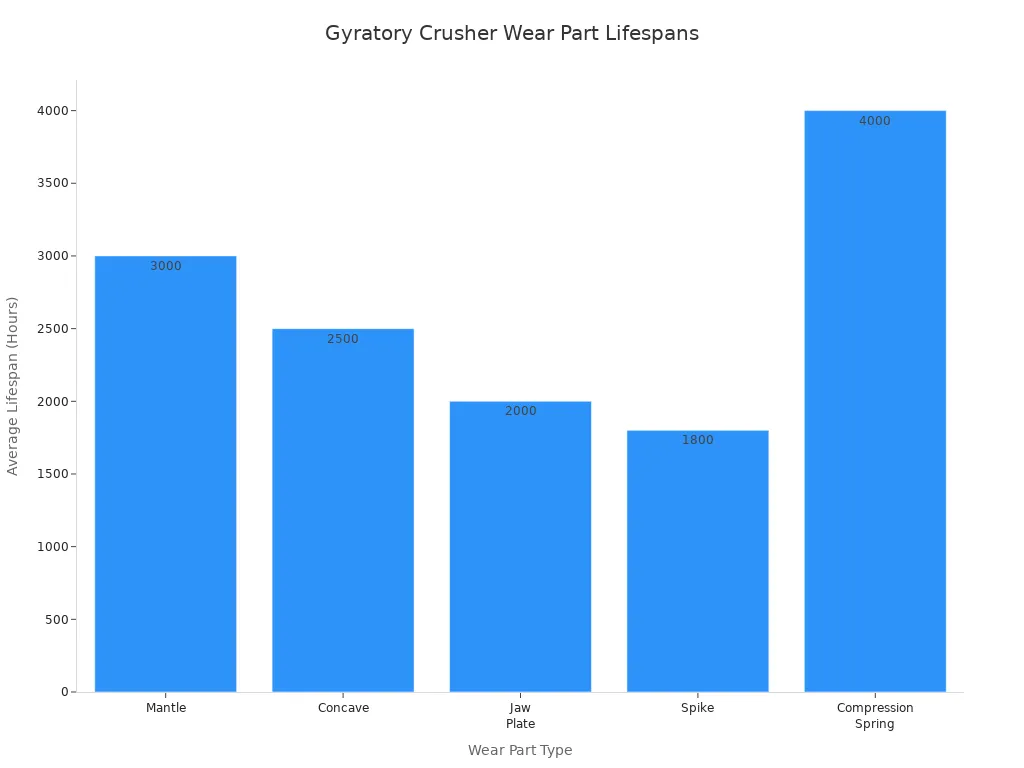
You should look at the outside of the crusher. Check for leaks in hoses and seals. Watch vibration levels to find problems early. If you check the mantle, concave liners, and spider bushings often, they last up to 30% longer. This means less downtime and more work gets done.
You need to think about costs before picking a gyratory crusher. These machines cost a lot at first, but they are good for big jobs. Here is a table that shows the main cost factors:
Cost Factor | Description |
|---|---|
CAPEX | Very High. These are massive, heavy-duty machines with a high initial investment. |
OPEX - Energy | High, but efficient on a cost-per-ton basis at high capacities. |
OPEX - Wear Parts | Medium. Concaves and mantles last long but are expensive to replace. |
Maintenance | Complex and needs skilled workers and special equipment. |
TCO Profile | Best for high-tonnage applications. Lowest cost per ton in large-scale operation. |
New technology helps you save money. Automation makes the crusher work better and lowers mistakes. New materials last longer and cut down on maintenance costs. Energy-saving designs use less power and help you follow environmental rules.
You must follow safety rules to keep everyone safe. Gyratory crushers have special safety features. These include self-tightening concave liners and hydraulic overload protection. The design gives better safety for operators. Other crushers may not have these features.
Safety Feature | Gyratory Crushers | Other Crushers |
|---|---|---|
Self-tightening concave liner | Yes | No |
Hydraulic overload protection | Yes | Varies |
Operator safety mechanisms | Enhanced due to design | Standard safety features |
You should check hydraulic systems often. Make sure the concave liners stay tight. Regular care keeps your crusher safe and helps stop accidents. If you skip checks or ignore problems, you risk downtime and damage.
Tip: Always follow the manufacturer’s safety rules and wear protective gear when you work near the crusher.
Gyratory crushers are easy to notice in mines and factories. They have a strong build that lets them crush big rocks. These machines can take in material from both sides. This saves time and helps you get more work done. Gyratory crushers are good for hard jobs and use less energy.
You can crush more rocks at once.
They work well with rough ores and lots of material.
They are reliable and help you stop less for repairs.
Feature | Benefit for You |
|---|---|
High Throughput | You process raw ore faster |
Robustness | It works in tough mining places |
Efficiency | You spend less money to run it |
If you need to crush a lot of rocks, think about using a gyratory crusher.
You find the crushing chamber between the mantle and the concave. This space is where rocks break down into smaller pieces. The crushing chamber shape helps you get even-sized material and smooth operation.
The crushing chamber shape controls how rocks move and break. A well-designed crushing chamber lets you crush more material faster. You also see less wear on gyratory crusher parts when the crushing chamber works well.
You should check the crushing chamber for wear and buildup. Clean out any stuck material. Replace worn liners. These steps help you keep the crushing chamber in top shape and avoid problems.
Tip: Regular checks of the crushing chamber help you spot issues early and keep your crusher running longer.
You can change the mantle and concave liners to adjust the crushing chamber size. This lets you control the size of the crushed material. You get the right output for your needs by changing the crushing chamber.
If the crushing chamber gets blocked, you must stop the crusher and clear the jam. Blockages can damage gyratory crusher parts and slow your work. Always watch the crushing chamber for signs of trouble.


