- All
- Product Name
- Product Keyword
- Product Model
- Product Summary
- Product Description
- Multi Field Search


Views: 0 Author: Site Editor Publish Time: 2026-03-27 Origin: Site


Choosing the right mobile crusher can make or break your project efficiency. Whether you’re handling hard rock, recycling materials, or large-scale aggregate production, the right machine ensures better output, lower costs, and smoother operations. This guide walks you through a clear, step-by-step process to select the best mobile crushing solution for your needs. From material type and capacity to mobility and power options, we’ll help you make smarter decisions with confidence and avoid costly mistakes.
Before picking a mobile crusher, we need to know what we’re crushing. Different materials behave differently, and choosing incorrectly can slow your project or wear out machines quickly.
Hard rock (granite, basalt): Tough, abrasive, wears parts fast. Crushers must be heavy-duty.
Soft rock (limestone): Easier to crush, impact crushers work well. Jaw crushers still fine for primary reduction.
Abrasive ores (iron ore, quartz): Needs high wear resistance and consistent feed.
Recycled materials (concrete, asphalt, bricks): Variable feed, often includes steel. Impact crushers handle this best.
Moist or sticky materials: Can clog crushers; open design or high-clearance machines work better.
Key material factors to consider:
| Factor | Why it matters |
|---|---|
| Hardness | Determines crushing force needed |
| Abrasiveness | Affects wear parts lifespan |
| Feed size | Decides if primary crushing required |
| Moisture content | High moisture may cause blockages |
Output shapes everything. It decides how your crusher performs and what you finally get. So, we need to be clear from the start.
Required product size: Are you aiming for coarse gravel, road base, or fine sand?
Particle shape: Some applications need cube-shaped aggregates, especially asphalt. Others accept irregular shapes for fill material.
Industry standards: Construction, asphalt, and concrete each follow specific grading requirements. You should align your output with those standards.
Impact on selection: Different crushers produce different results. Jaw crushers usually create coarser output. Cone and impact crushers give finer, more uniform particles.
| Crusher Type | Output Size | Particle Shape | Best Use |
|---|---|---|---|
| Jaw Crusher | Coarse | Irregular | Primary crushing |
| Impact Crusher | Medium to fine | Cubical | Recycling, asphalt |
| Cone Crusher | Fine, uniform | Consistent | High-quality aggregates |
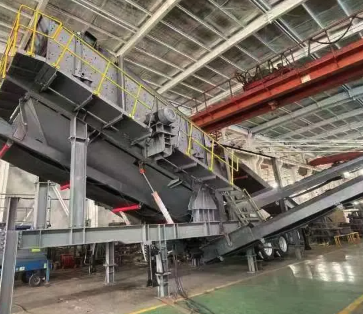
Capacity defines how fast your project moves. Too slow causes delays. Too fast wastes money.
Throughput (tons per hour): Estimate your required daily output, then convert it into hourly capacity.
Daily/project output: Large mining or quarry projects need high-volume machines. Smaller demolition jobs can use compact units.
Matching capacity: The crusher should match both feed rate and downstream equipment. Balance is key.
Risks to avoid:
Undersized machine → bottlenecks, downtime
Oversized machine → higher fuel cost, wasted investment
A good rule: Always allow a small capacity buffer. It keeps your operation stable under peak load.
Different crushers serve different roles. The right choice depends on your material and output goals.
Handles primary crushing
Works well with large, hard materials like granite or blasted rock
Built with a simple and strong structure
High reliability under heavy workloads
Think of it as your first step in the crushing process. It reduces big rocks into manageable sizes.
Used in secondary and tertiary crushing stages
Best for soft materials and recycling such as concrete and asphalt
Produces well-shaped, cubical aggregates
Ideal when final product quality matters
It works like a shaping machine, refining material into uniform sizes.
Designed for precise secondary or tertiary crushing
Produces consistent particle size and high-quality output
Handles hard and abrasive materials efficiently
Lower wear cost compared to impact crushers in tough applications
This is the “precision tool” for consistent, high-grade aggregates.
Mobility affects how easily you can move and set up your equipment. It also impacts cost and flexibility.
Best for rough terrain and mining environments
Can move directly on-site without extra equipment
Designed for frequent relocation within a project
Offers excellent stability on uneven ground
Ideal when your work location keeps changing or terrain is challenging.
Easy to transport on public roads
Generally lower upfront investment
Suitable for quarries, fixed sites, or semi-stationary work
Requires towing but offers flexibility for road-based logistics
Better when you need cost efficiency and simple transport between sites.
Mobile crusher safety features are critical to protecting operators and maintaining smooth on-site operations. Reliable machines should be equipped with emergency stop buttons positioned at key points, allowing immediate shutdown in case of unexpected situations.
Built-in safety guards and interlock systems further prevent accidental contact with moving parts, significantly reducing workplace hazards. Prioritizing safety not only protects operators but also helps prevent costly downtime and equipment damage. Additionally, ensuring the crusher complies with local safety regulations and industry standards is essential for legal operation and long-term project success.
When choosing a mobile crusher, it is important to consider its environmental performance and sustainability features. Advanced dust suppression systems help maintain a cleaner working environment and reduce airborne particles, which is especially important in urban or sensitive areas. Noise reduction technology minimizes disturbance to nearby communities and improves on-site working conditions.
In addition, modern crushers with emissions control systems and energy-efficient designs help lower carbon footprint and reduce fuel consumption. Selecting environmentally friendly equipment not only supports regulatory compliance but also contributes to long-term cost savings and sustainable operations.
Selecting a reputable manufacturer and supplier plays a vital role in ensuring the quality and reliability of your mobile crusher. Look for brands with a proven track record in delivering durable and high-performance crushing equipment across various industries. High-quality manufacturing ensures better machine longevity and reduced maintenance issues over time. It is also important to confirm that spare parts are readily available, either locally or through a global supply network, to minimize downtime. Furthermore, strong after-sales support, technical assistance, and operator training services can greatly enhance equipment performance and overall project efficiency.
Choosing a trusted partner like AXSON can provide added confidence in your investment. AXSON stands out with a professional technical team, independent R&D capabilities, and a digital intelligent operation and maintenance platform that improves equipment efficiency and reliability. With a comprehensive product range—including large-scale mining machinery—AXSON offers strong product advantages tailored to different project needs.

Adjust crusher configuration to project needs
Choose a mobile crusher with customizable settings such as crusher type, closed-side setting, and output size to match your project requirements. Proper configuration ensures optimal performance, whether for aggregate production, mining, or recycling applications.
Integrate with screeners or conveyors
A well-designed mobile crushing system should easily integrate with screening units and conveyor systems to create a complete crushing and screening plant. This integration improves material handling efficiency and supports continuous, high-capacity production.
Remote monitoring and automation help efficiency
Modern mobile crushers equipped with remote monitoring and automation systems allow operators to track performance in real time. This helps improve operational efficiency, reduce downtime, and optimize maintenance scheduling for better productivity.
Flexible discharge settings improve workflow
Adjustable discharge settings and hydraulic control systems enable precise control over final product size and output flow. This flexibility enhances workflow efficiency and ensures consistent material quality for different construction or mining applications.
Choosing the right mobile crusher is not guesswork. It is a clear decision process. We use this checklist to keep things simple and practical. It helps avoid costly mistakes and ensures smooth project performance.
| Checklist Item | Key Question |
|---|---|
| Material Type | What are we crushing? |
| Capacity | How much do we need per hour? |
| Crusher Type | Which machine fits best? |
| Mobility | Do we need to move it often? |
| Power Source | What energy source works best? |
| Maintenance | Is support reliable? |
| Compliance | Does it meet safety and environmental rules? |
Now that you understand how to choose the right mobile crusher, it’s easier to match equipment with your real project needs. Focus on material, capacity, and long-term performance, and you’ll avoid unnecessary downtime and expenses.
If you’re looking for a reliable partner, AXSON offers advanced mobile crushing solutions backed by strong R&D, dependable quality, and responsive global service. Ready to upgrade your operation? Take the next step and choose a solution that truly supports your productivity and growth.
Material type is the most important factor because it determines the crushing method, machine strength, and wear resistance needed.
Estimate your total project output per day, then divide by working hours to get tons per hour (TPH). Add a safety buffer to handle peak loads.
A jaw crusher or cone crusher is best for hard rock because they provide high crushing force and better durability under heavy abrasion.
An impact crusher is ideal for soft materials, recycled concrete, and asphalt because it produces well-shaped, cubical aggregates.
Maintenance is very important because easy access to spare parts and reliable support reduces downtime and keeps production stable.


