- All
- Product Name
- Product Keyword
- Product Model
- Product Summary
- Product Description
- Multi Field Search


Views: 0 Author: Site Editor Publish Time: 2026-09-18 Origin: Site


Primary crushing in hard rock mining presents extreme mechanical demands. Processing high-compressive-strength and highly abrasive ores like granite, basalt, and quartzite destroys weak equipment. These materials exert massive forces on crushing chambers. Underspecifying your primary crusher leads to severe financial and operational consequences. You will face excessive manganese wear and frequent maintenance downtime. Bridging, plugging, and bottlenecked plant throughput will cripple your production targets.
You need a rigorous technical evaluation process to select the right equipment. An industrial-grade Hard Rock Jaw Crusher balances capital expenditure with continuous-duty reliability. Choosing the correct machine minimizes long-term operating expenses. This guide details how to evaluate mechanical specifications, chamber geometry, and metallurgical factors. You will learn how to match a primary crusher directly to your site's specific geological profile.
Geology Dictates Design: The selection of a primary crusher must begin with a precise analysis of the ore’s Bond Work Index (BWI), abrasiveness, and maximum feed size.
Chamber Geometry is Critical: Nip angle, stroke length, and jaw die profiles directly determine throughput efficiency and wear rates in hard rock applications.
Single-Toggle vs. Double-Toggle: While single-toggle designs dominate modern operations due to higher throughput, double-toggle crushers remain relevant for ultra-abrasive, unyielding materials.
Lifecycle Value Over Upfront Cost: Evaluating hydraulic CSS (Closed Side Setting) adjustment, automated tramp iron relief systems, and equipment versatility is essential for minimizing operational downtime and long-term maintenance costs.
You must establish baseline operational requirements before evaluating specific machine models. Buying a crusher based solely on a manufacturer's brochure leads to poor site integration. You need to define your maximum feed size, target production rate, and material characteristics. These three variables dictate the physical size and mechanical strength required from your primary crushing station. Failing to frame these parameters accurately results in oversized equipment that wastes capital or undersized equipment that breaks down constantly.
Site integration requires a deep understanding of how the primary station feeds the rest of the plant. The primary crusher sets the pace for the entire operation. If it stalls, the secondary cone crushers run empty, and the screening plant shuts down. You must design the primary station with a surge pile or a heavy-duty apron feeder to ensure a consistent choke-feed condition. Choke feeding maximizes rock-on-rock attrition within the chamber and improves the shape of the output material.
Rock properties directly affect jaw crusher selection. The Unconfined Compressive Strength (UCS) shows how difficult the rock is to break. Hard rocks with high UCS require stronger frames, heavy-duty eccentric shafts, and reinforced components to handle crushing forces. The Bond Abrasion Index (Ai) measures wear resistance requirements. Highly abrasive materials need durable manganese jaw dies and stronger wear parts. Understanding UCS and Ai helps prevent failures and estimate maintenance costs accurately.
| Rock Type | Typical UCS (MPa) | Abrasion Index (Ai) | Crusher Frame Requirement |
|---|---|---|---|
| Limestone | 50 - 100 | Low (0.01 - 0.10) | Standard Duty |
| Granite | 150 - 250 | Medium to High (0.30 - 0.60) | Heavy Duty |
| Basalt | 200 - 300 | High (0.40 - 0.70) | Extra Heavy Duty |
| Quartzite | 250 - 400+ | Extreme (0.60 - 0.90+) | Ultra Heavy Duty / Double Toggle |
Sizing the feed opening correctly prevents material bridging. The maximum rock size entering the chamber should never exceed 80 to 85 percent of the crusher's gape. If your gape is 1,000 mm, your top feed size must stay below 850 mm. Pushing this limit causes large boulders to wedge in the opening. This halts production and requires dangerous manual intervention to clear the blockage.
When a rock bridges across the chamber, operators must deploy a hydraulic rock breaker boom to fracture the boulder in place. If a boom is not installed, personnel must use wedges, cables, or even explosives to clear the jam. This introduces severe safety hazards and causes hours of unplanned downtime. Properly sizing the gape eliminates this risk entirely.
Your target Tons Per Hour (TPH) dictates the required volumetric capacity. A standard industrial Jaw Crusher handles moderate production rates efficiently. Massive, mega-class rock crushers are necessary for high-volume mining operations. The physical footprint of the machine must match your site's logistical constraints. Large crushers require extensive concrete foundations and massive overhead cranes for maintenance. You must align your TPH goals with your available infrastructure.
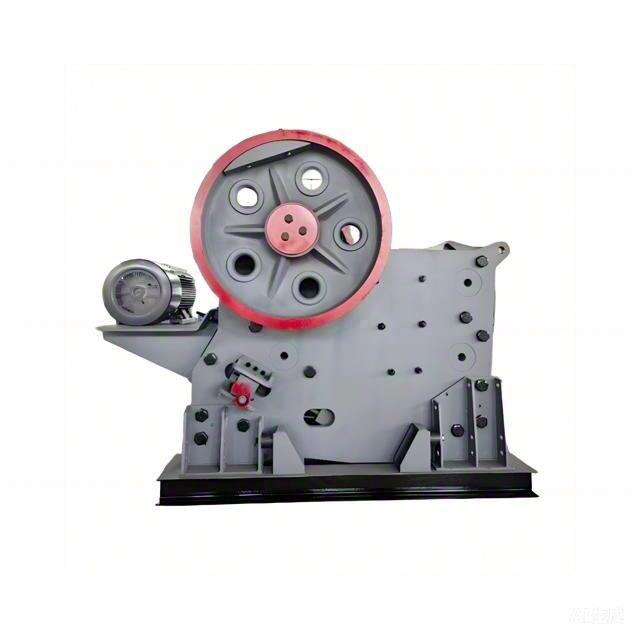
Hard rock mining relies on two dominant primary crushing technologies. You must choose between a jaw crusher and a gyratory crusher. Both machines fracture rock through compressive force. However, their mechanical designs, physical footprints, and capital requirements differ significantly. Selecting the wrong technology for your primary stage creates a permanent bottleneck in your processing plant.
| Feature | Jaw Crusher | Gyratory Crusher |
|---|---|---|
| Capital Expenditure (CapEx) | Lower upfront cost | Significantly higher upfront cost |
| Production Capacity | Typically under 1,500 TPH | Ultra-high capacity (2,000+ TPH) |
| Footprint & Installation | Compact, requires less headroom | Massive, requires deep foundations |
| Feed Material Shape | Excellent for blocky, slabby material | Requires more uniform feed distribution |
| Maintenance Complexity | Straightforward, accessible parts | Complex, requires specialized lifting gear |
A jaw crusher is a good choice when you need lower investment and flexible installation. Its large rectangular feed opening handles oversized, blocky materials effectively, making it suitable for quarries and underground mining. With a compact design and simpler installation requirements, jaw crushers are easier to deploy and maintain. They are commonly used for production rates below 1,000–1,500 TPH where reliability and space efficiency are important.
Gyratory crushers dominate ultra-high-capacity applications. You need a gyratory crusher when your production targets exceed 2,000 TPH. Their continuous crushing action provides a massive volumetric advantage. Unlike the intermittent crushing cycle of a jaw, a gyratory crushes rock continuously throughout its entire rotation. This high-speed operation handles direct-dump truck feeding with ease.
However, this capacity comes at a significantly higher infrastructure cost. Gyratory crushers require massive concrete silos and deep underground foundations. The civil engineering costs often exceed the price of the machine itself. Maintenance requires specialized overhead cranes to lift the heavy main shaft assembly. You should only choose a gyratory crusher when your mine life and production volumes justify the massive initial investment.
The nip angle controls how effectively a jaw crusher grips and crushes rock. A typical nip angle is 18–22 degrees. If the angle is too large, rocks may slip upward, reducing capacity and increasing jaw die wear. If it is too small, crushing efficiency and chamber capacity will decrease. The ideal angle depends on the rock type and surface characteristics.
The crushing stroke also affects performance. A longer upper stroke improves the crusher’s ability to grab large rocks, while the lower stroke controls product size and material discharge. Proper balance prevents material blockage and maintains stable crushing efficiency.
精简版:
The nip angle determines how well a jaw crusher grips and crushes rock. A typical angle is 18–22 degrees. If it is too large, rocks may slip and reduce efficiency; if it is too small, crushing capacity decreases. The stroke length also affects performance, with the upper stroke controlling feed intake and the lower stroke controlling product size. Proper chamber design balances crushing efficiency, capacity, and material flow.
Wear part metallurgy determines your maintenance intervals. Jaw dies are typically cast from manganese steel alloys. Standard options include 14%, 18%, or 22% manganese content. Manganese steel possesses a unique property called work-hardening. As rocks impact the jaw die, the surface grain structure transforms. The surface becomes incredibly hard while the core remains ductile and impact-resistant.
Harder rocks require higher manganese content or specialized titanium carbide inserts. The physical profile of the jaw die also matters. Corrugated dies concentrate crushing force on specific points. This works well for slabby material, helping to break it into cubical shapes. Flat dies provide more surface area and last longer when processing highly abrasive, blocky material. You must match the die profile to your rock shape.
| Jaw Die Profile | Best Application | Performance Characteristics |
|---|---|---|
| Standard Corrugated | General hard rock, granite | Good balance of grip and product shape. |
| Super Grip / Sharp Tooth | Round gravel, slippery rock | Prevents boiling, aggressive intake. |
| Flat / Heavy Duty | Extremely abrasive rock, quartzite | Maximum wear life, poor product shape. |
| Quarry / Slabby | Sedimentary rock, limestone slabs | Breaks long slabs into cubical pieces. |
The Closed Side Setting (CSS) determines your final product size. It is the smallest distance between the jaw dies at the bottom of the chamber. Maintaining a consistent CSS is critical for downstream secondary crushing efficiency. If the CSS opens up due to wear, your secondary cone crushers will be overloaded with oversized feed. This creates a bottleneck in your entire plant.
Older machines use manual shim systems to adjust the CSS. This requires stopping the machine, loosening tension rods, and physically inserting metal plates. It is dangerous and time-consuming. Modern heavy-duty crushers use hydraulic wedge adjustment systems. Operators can adjust the CSS in minutes using a push-button interface. Hydraulic systems also provide tramp iron relief, protecting the crusher from uncrushable metal objects.
The toggle plate acts as a mechanical fuse in the system. If an uncrushable object like an excavator bucket tooth enters the chamber, the hydraulic system will attempt to open the CSS. If the pressure exceeds safe limits, the toggle plate is designed to snap. This intentional failure protects the expensive main frame and eccentric shaft from catastrophic damage. Replacing a broken toggle plate takes a few hours, whereas replacing a cracked main frame takes weeks.
Top-tier manufacturers offer various deployment methods for primary crushing. You must select a configuration that matches your mine plan and logistical capabilities. The market provides stationary plants, modular skid-mounted units, and fully mobile tracked machines. Each approach offers specific advantages regarding installation speed, structural rigidity, and long-term flexibility.
You must evaluate equipment based on proven track records in hard rock environments. Industry benchmarks include the Metso Nordberg C Series and Sandvik heavy-duty units. These machines have decades of proven performance in granite and basalt quarries. Specialized custom manufacturers like Leemay also provide robust solutions engineered specifically for extreme mining conditions.
Global parts availability is a critical evaluation factor. A premium crusher becomes a liability if you cannot source replacement bearings or jaw dies quickly. You must assess the OEM service network in your specific region. Choose a manufacturer that maintains local parts depots and provides rapid deployment of field service technicians. Downtime waiting for parts destroys your profitability.
The mining industry is shifting toward heavy-duty mobile tracked crushers. These units enable in-pit crushing and conveying (IPCC). Moving the crusher closer to the blast face drastically reduces haul truck fuel costs. Mobile units offer rapid setup times and excellent flexibility as the mine face advances. They eliminate the need for expensive civil engineering and concrete foundations.
However, mobile chassis have structural limitations. They cannot match the mass and rigidity of a concrete-anchored stationary unit. When dealing with the highest-density hard rocks, stationary crushers perform better. The massive concrete foundation absorbs destructive vibrations. Mobile units processing ultra-hard rock may experience chassis fatigue and accelerated component wear over time.
Tracked crushers also face weight restrictions for highway transport. To keep the machine under legal weight limits, manufacturers sometimes reduce the thickness of the crusher frame or use lighter flywheels. These compromises reduce the machine's effectiveness in extreme hard rock applications. You must verify the actual weight and frame thickness of the crushing unit mounted on the mobile chassis before purchasing.
Understanding kinematic differences is essential. Single-toggle crushers use one eccentric shaft at the top of the pitman. This creates an elliptical crushing motion. The jaw die pushes inward to compress the rock and moves downward to force it through the chamber. This downward abrasive action provides higher capacity but causes faster wear on the manganese dies.
Double-toggle crushers use two shafts and a complex linkage system. The pitman swings in a pure pendulum motion. This provides pure compression without the downward abrasive rubbing. Double-toggle machines have lower volumetric capacity than single-toggle designs. However, they cause significantly less wear on the jaw dies. They remain highly relevant for processing ultra-abrasive, unyielding materials where single-toggle wear rates would be unacceptable.
You must model the financial impact of your equipment choice accurately. The purchase price is only a fraction of the total financial commitment. You must evaluate installation costs, energy consumption, and projected wear part usage. A cheaper machine often requires expensive foundation modifications. It may also consume more electricity per ton of rock crushed. You need a comprehensive financial model to make an informed decision.
A direct trade-off exists between initial CapEx and long-term OpEx. Buying a heavier, premium crusher requires a larger initial investment. However, these robust machines suffer less structural fatigue. They require fewer emergency repairs and consume wear parts at a slower rate. Cheaper, lighter models save money upfront but drain your budget through frequent wear part replacements and unplanned downtime.
You must calculate the cost of lost production. If a cheap crusher breaks down for three days, the lost revenue often exceeds the price difference of a premium machine. Investing in high-quality bearings, cast steel pitmans, and hydraulic adjustment systems lowers your daily operating expenses. You achieve a faster return on investment through consistent, uninterrupted production.
Equipment versatility improves your overall asset return on investment (ROI). A robust primary crusher should handle varying material types. Your mine plan might require processing abrasive concrete for site recycling alongside virgin granite. A machine that adapts to different feed materials provides better long-term value. You can redeploy versatile crushers to different sites as operational needs change.
Consider the resale value of the equipment. Premium brands maintain high residual values on the secondary market. When your project concludes, you can recover a significant portion of your initial CapEx. Cheaper, lesser-known brands depreciate rapidly. Factoring in equipment versatility and residual value gives you a true picture of the machine's lifecycle profitability.
Primary crushing consumes massive amounts of electricity. The efficiency of the drive system directly impacts your monthly utility bills. Heavy flywheels play a critical role in energy management. They store kinetic energy during the idle phase of the crushing cycle. When the jaw bites into a hard rock peak, the flywheel releases this energy to shear through the material.
This stored energy reduces electrical load spikes. It prevents the electric motor from drawing excessive current during heavy crushing loads. Smooth power draw reduces motor wear and extends the life of your electrical components. Evaluating the mass and balance of the flywheels helps you choose a machine that minimizes energy consumption while maximizing crushing force.
Drive belt tensioning also affects efficiency. Slipping belts waste energy and generate excessive heat. Modern crushers utilize automatic motor bases that maintain constant belt tension regardless of load conditions. This small mechanical detail significantly improves power transmission efficiency and extends the life of the v-belts.
The best primary crusher for your operation is one whose mechanical specifications are explicitly matched to your site's geological profile. You cannot guess when processing granite, basalt, or quartzite. You must align the machine's mass, nip angle, and metallurgy with the rock's compressive strength and abrasiveness. A rigorous evaluation process prevents costly operational bottlenecks and ensures continuous plant throughput.
Follow this shortlisting logic when evaluating your options:
Define your maximum feed size and target TPH to determine the required volumetric capacity.
Test your rock's UCS and abrasiveness to dictate frame mass and wear part metallurgy.
Choose between stationary and mobile configurations based on your mine plan and haulage strategy.
Assess CSS adjustment mechanisms, prioritizing hydraulic systems for safety and efficiency.
Commission a formal material flow analysis to identify potential bottlenecks in your proposed plant layout.
Take these action-oriented next steps to finalize your selection. Request simulation data from manufacturers using software like Bruno or PlantDesigner to verify throughput claims. Consult directly with an application engineer to review your rock testing data. Finalize your foundation engineering plans before issuing a formal Request for Quotation (RFQ).
A: The maximum feed size depends entirely on the gape of the specific crusher model. As a strict operational rule, you must keep the top rock size at 80 to 85 percent of the opening dimension. Exceeding this limit causes rocks to bridge across the chamber, halting production and requiring dangerous manual clearing procedures.
A: Lifespan varies wildly based on the rock's silica content and Bond Abrasion Index. In highly abrasive materials like quartzite, dies may only last a few weeks. In softer ores, they can last several months. Utilizing high-manganese alloys helps, as the impact forces work-harden the metal surface, extending its operational life.
A: A single-toggle crusher uses one eccentric shaft to create an elliptical motion, providing both compressive and downward abrasive action for higher throughput. A double-toggle crusher uses two shafts and a linkage system to create a pure pendulum crushing motion. This pure compression causes significantly less wear on dies when processing highly abrasive rock.
A: Jaw crushers feature much larger rectangular feed openings specifically designed to accept run-of-mine blasted rock. They handle massive, blocky boulders easily. Cone crushers have restrictive feed openings and are engineered for secondary or tertiary crushing stages, where they require smaller, pre-crushed feed material to operate effectively.
A: Higher compressive strength makes rock harder to fracture. This requires tighter Closed Side Setting management and draws more electrical power. The machine must work harder to shear the rock peaks, which effectively reduces the volumetric throughput capacity compared to processing softer, easily fractured materials.


