- All
- Product Name
- Product Keyword
- Product Model
- Product Summary
- Product Description
- Multi Field Search


Views: 0 Author: Site Editor Publish Time: 2026-01-01 Origin: Site


Gyratory crushers crush all the time. This helps them work faster than jaw crushers. Jaw crushers only crush when the jaws close.
Gyratory crushers have a big opening. They can take in larger rocks. This stops blockages and makes them work better.
Gyratory crushers break big rocks into small pieces fast. They do this in one step. This makes crushing quicker.
Gyratory crushers use less energy for each ton of rock. This lowers costs and makes them more efficient.
Checking and fixing gyratory crushers often helps them last longer. It also keeps them working well in hard jobs.
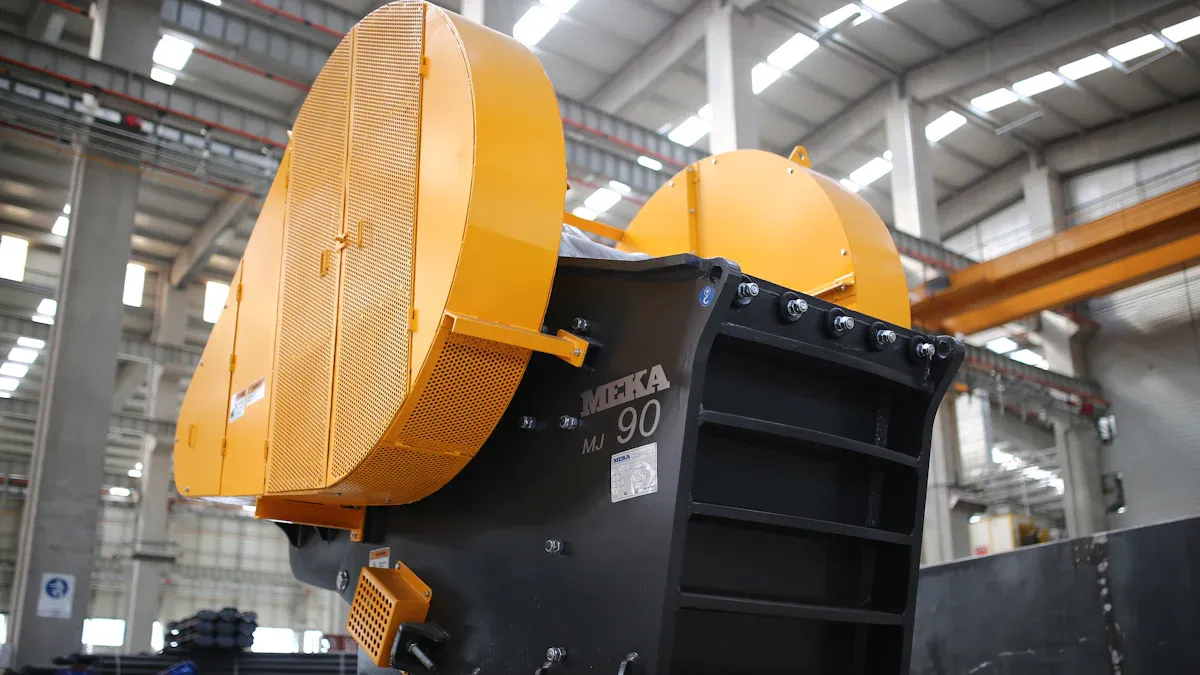
A gyratory crusher works faster because it crushes all the time. The rocks get crushed without stopping. Jaw crushers only crush when the jaws close. The jaws open and close, so the crushing stops and starts. This makes jaw crushers slower at moving material.
In a gyratory crusher, rocks move through the chamber without stopping.
Jaw crushers crush in short bursts, which slows down how much you can process.
Gyratory crushers can handle 500 to 10,000 tons each hour because they never stop crushing.
Tip: If you need to crush a lot of rocks fast, pick a gyratory crusher. It works steady and quick.
A big feed opening lets you put in bigger rocks. Gyratory crushers have much bigger openings than jaw crushers. This design helps stop rocks from getting stuck and blocking the way. You can put in large rocks right away, which helps you crush more.
Type of Crusher | Input Size (mm) | Output Size (mm) | Reduction Ratio | Material Suitability |
|---|---|---|---|---|
Jaw Crusher | Up to 1000 | 150 to 300 | 3:1 to 6:1 | Hard, abrasive materials |
Gyratory Crusher | 500 to 2000 | 100 to 300 | 4:1 to 6:1 | Very large feed sizes |
A bigger opening means you can use the crusher after the first crusher, even if the rocks are still big.
This makes the crusher work better and faster.
A gyratory crusher has a high reduction ratio. This means it can take big rocks and make them much smaller in one step. The reduction ratio shows how much the rock size gets smaller.
Crusher Type | Reduction Ratio |
|---|---|
Gyratory Crusher | 4:1 to 7:1 |
Jaw Crusher | 3:1 to 6:1 |
Gyratory crushers break rocks into smaller pieces better than jaw crushers.
This helps you get the right size rocks faster and with less work.
You can see the main differences between gyratory and jaw crushers in this table:
Feature | Gyratory Crusher | Jaw Crusher |
|---|---|---|
High capacity per dollar of investment | Yes | No |
Shape of receiving opening for slabby material | Yes | No |
Easily adjusted for wear | No | Yes |
Handles sticky or dirty feed better | No | Yes |
Extra strength for tough materials | More expensive | Less expensive |
Gyratory crushers give you more power and work better for big jobs. They crush all the time, have a big opening, and break rocks down a lot. These things make gyratory crushers the best choice when you need to crush lots of rocks quickly and use less energy.
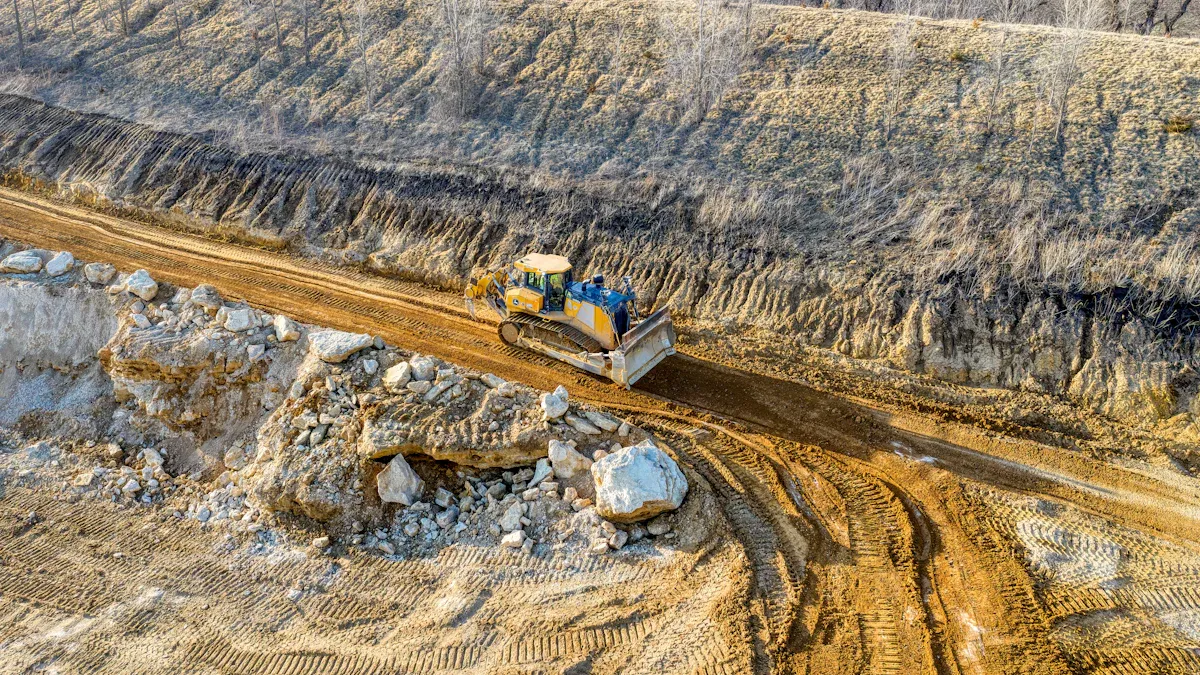
You want a crusher that moves rocks fast and smooth. Gyratory crushers do this better than jaw crushers. Their design lets rocks move through the chamber without stopping. The crushing chamber is deeper, so rocks break down more in one pass. The feeding system works well, so you do not need extra machines to keep rocks moving.
Here is a table that shows how the design helps with material flow and capacity:
Feature | Explanation |
|---|---|
Continuous Operation | Gyratory crushers work all the time and handle lots of rocks. |
Deeper Crushing Chamber | The chamber is deeper, so you get smaller rocks and a higher crushing ratio. |
Efficient Feeding Mechanism | You can feed rocks straight in, keeping a steady flow without extra tools. |
When you look at industry numbers, you see gyratory crushers handle much more rock than jaw crushers. Many gyratory crushers process over 1,200 tons each hour. Some can even crush 5,000 tons or more every hour. Here is a comparison:
Crusher type | Typical capacities (t/h) |
|---|---|
Gyratory crusher | 1200-over 5000 |
Jaw crushers cannot reach this level of capacity. You finish more work in less time with a gyratory crusher.
You want to save energy when crushing rocks. Gyratory crushers use less energy for each ton than jaw crushers. They crush rocks all the time, so you do not waste power starting and stopping. The design also helps stop energy from turning into heat. You get more crushing for every bit of energy you use.
When you compare both types, jaw crushers need more electricity to crush the same amount of rock. Gyratory crushers work better, so you spend less on power. This helps you lower your costs and makes your work site run better.
Note: Using less energy means you can run your crusher longer and crush more rocks without spending a lot.
Friction slows machines and wastes energy. Gyratory crushers have a design that lowers friction losses. You get less heat and less wear on moving parts. This means the crusher runs smoother and lasts longer.
Gyratory crushers use less energy for each ton than jaw crushers.
The design keeps friction low, so you need less electricity for the same amount of crushing.
When you use a gyratory crusher, you get higher efficiency and more throughput. You also get a machine that stays in good shape for longer. This helps a lot when you need to crush many rocks every day.
You want your crusher to last a long time. The wear resistance of each part in a gyratory crusher matters a lot. It affects how often you need to stop for repairs. If you pick liners that fit your job, you can avoid shutdowns. This helps you save money on repairs. Good wear parts help you have less downtime and lower costs. You should check and change worn parts on time. This keeps your crusher working well.
Condition | Action | Rationale |
|---|---|---|
Both <50% worn | Keep using; check every week | Enough wear means you do not need to replace parts right now. |
Mantle >70% worn, concave <50% | Change mantle only | This stops mismatched parts and saves money. |
Mantle >70% worn, concave >60% | Change both | This stops future problems and lessens downtime. |
Concave >70% worn, mantle <50% | Change concave | This keeps the crusher working well and stops more wear. |
Tip: Check your crusher often. This helps you avoid big problems and keeps your work going.
You want your crusher to work most of the time. Gyratory crushers let you go longer between repairs than jaw crushers. This means you spend less time fixing and more time crushing rocks. If you plan your repairs, you can stop sudden breakdowns. This keeps your site safe.
Benefit | Description |
|---|---|
More time working | Fewer surprise stops, so you get more done. |
Lower cost per ton | Parts last longer and use less energy. |
Better safety | Makes the work area safer for everyone. |
Easier planning | You can plan repairs instead of fixing things fast. |
A good repair plan helps you know when to stop for service. You save money and keep your crusher working longer.
You sometimes work in rough places. Gyratory crushers handle tough jobs better than jaw crushers. Their design uses strong materials and smart features. They can take heavy loads and shocks. This makes them last longer and work better in mining and rock jobs.
Design Feature | Contribution to Durability |
|---|---|
Strong main shaft | Handles heavy loads during crushing |
Tough steel in key spots | Stops wear in important parts like the mantle |
Big upper counterweight | Cuts moving loads by 60% for smoother work |
Dual hydraulic tramp release | Deals with things that cannot be crushed |
Better metals in worn areas | Lasts up to three times longer |
Careful balancing | Stops shaking at high speeds |
Note: Gyratory crushers last longer and break down less than jaw crushers. You can trust them to keep working, even in hard jobs.
Gyratory crushers work well when you need to crush a lot. They are used in big mines and large quarries. These machines can crush very large rocks fast. The table below shows how gyratory crushers do better than jaw crushers:
Application Type | Gyratory Crusher Advantage |
|---|---|
High-capacity primary plants (> 1000 tph) | Higher throughput than jaw crushers, economical at scale |
Large-scale hard-rock mining | Handles very large feed sizes with consistent throughput |
High-tonnage aggregate quarries | Lower sensitivity to abrasion compared to jaw crushers |
You can trust a gyratory crusher to move lots of rocks every hour. These machines can crush about three times more than a jaw crusher with the same opening.
Many people pick gyratory crushers because they work well and last long. You get steady crushing and less time fixing the machine. Users say these crushers do not slow down with big rocks or hard jobs. You also use less energy for each ton, so you save money. Some people like jaw crushers for smaller jobs or easy repairs. Think about what your project needs before you choose a crusher.
Gyratory crushers are best for big jobs.
Jaw crushers are easier to fix and cost less at first.
Gyratory crushers crush bigger rocks and last longer.
You can look at real projects to see how gyratory crushers work. At the TISCO Yuanjiacun iron mine, engineers used a gyratory crusher to make more iron. The liners lasted longer and there was less downtime. This helped them get more output and spend less money. Gyratory crushers can crush rocks up to 2000 mm and keep a high reduction ratio. Jaw crushers work well with smaller rocks but cannot match the high capacity or reliability of gyratory crushers in big mines.
Crusher Type | Feed Size Capacity (mm) | Output Size Range (mm) | Reduction Ratio | Typical Use Case and Reliability |
|---|---|---|---|---|
Gyratory Crusher | 500 to 2000 | 100 to 300 | 4:1 to 6:1 | High capacity, robust, reliable for hard ores |
Jaw Crusher | Up to 1000 | 150 to 300 | 3:1 to 6:1 | Simple, durable, less efficient for large jobs |
Note: Pick the crusher that fits your site’s needs. Gyratory crushers give the best results for big, tough jobs.
You get more throughput with a gyratory crusher because it crushes rocks all the time. Its design helps it work without stopping. Pick this crusher if you need to break big rocks and move lots of material. It works well in large mines and quarries. You will finish jobs faster and your site will run better. This makes your work more efficient.
You get higher capacity with a gyratory crusher. Its design lets you crush bigger rocks faster. You can use it for mining and large quarries where you need to move a lot of material.
You save power because the gyratory crusher works all the time. The steady crushing action uses less energy for each ton of rock. You spend less money on electricity.
You can use a jaw crusher for hard rocks. It works well for smaller jobs. You may need more repairs if you crush very tough materials often.
You should check your crusher every week. Look for worn parts and replace them before they break. This helps you avoid downtime and keeps your machine working.
You see gyratory crushers in mining, aggregate quarries, and large construction sites. These industries need machines that handle big rocks and high volumes.


