- All
- Product Name
- Product Keyword
- Product Model
- Product Summary
- Product Description
- Multi Field Search


Views: 0 Author: Site Editor Publish Time: 2026-09-18 Origin: Site


Aggregate and mining environments present harsh operational realities. Abrasive feed materials constantly degrade crushing equipment. Heavy rocks impact steel components with massive force hour after hour. Premature failure of these components directly results in unscheduled downtime. You lose throughput immediately. Maintenance costs compound quickly. This severely impacts your cost-per-ton metrics and overall profitability. You need a strategic approach to sourcing, evaluating, and maintaining these components. Proper selection maximizes wear life. It improves crushing performance. It ensures predictable plant availability. Operators must understand the metallurgy behind the steel. They must grasp the mechanical forces at play inside the crushing chamber. We will explore how to evaluate materials, understand mechanical integrity, and execute proper maintenance protocols to keep your plant running efficiently.
Material Science Dictates Longevity: Selecting the correct manganese steel alloy grade for wear parts is highly dependent on the specific abrasiveness and compressive strength of the feed material.
Mechanical Integrity Prevents Catastrophe: Structural components like the toggle plate act as mechanical fuses; compromising on their exact specifications risks catastrophic damage to the pitman or frame.
Operational Cost Evaluation Over Initial Price: Evaluating parts based on cost-per-hour of operation yields better financial outcomes than sourcing based strictly on the lowest upfront purchase price.
Maintenance Execution is Critical: Even premium parts will fail prematurely without rigorous installation protocols, proper jaw gap (CSS) adjustment, strict lubrication schedules, and the use of correct clamping mechanisms.
Operational success requires consistent throughput. You must hit target product gradation. Maximum uptime is non-negotiable. Achieving these goals depends entirely on the condition of your crushing chamber. Unexpected part failure triggers a cascading financial impact. You lose production tonnage immediately. Emergency labor costs spike as crews scramble to replace broken components. Downstream equipment starves for material. Conveyors run empty. Screens stop vibrating. Secondary crushers sit idle. This halts the entire plant and destroys daily production targets.
Worn parts decrease the mechanical efficiency of the crushing chamber. You face a wear versus yield trade-off. Energy consumption rises as plates lose their profile. The motor draws more amps to crush the same amount of rock. Particle shape degrades before the part actually breaks. You produce more unwanted fines and slabby material. You spend more power to crush less rock. Replacing Jaw Crusher Parts at the right interval prevents these hidden efficiency losses. Monitoring amp draw helps identify when plates lose their effectiveness. Ignoring these signs leads to severe mechanical strain on the entire drive system.
Let us look at the mechanics of a worn chamber. When the corrugations on the die plates flatten out, the rock no longer breaks cleanly in tension. Instead, the machine relies on sheer compressive force, which requires significantly more energy. The rock tends to slip upward during the crushing stroke, a phenomenon operators call boiling. Boiling not only reduces your tons-per-hour output but also accelerates wear on the upper sections of the cheek plates and the feed chute.
Running with worn components shifts the crushing zone lower in the chamber. This concentrates extreme stress on the bottom edge of the pitman and the lower frame bearings. You might think you are saving money by squeezing another week out of a set of dies. In reality, the increased power draw, reduced product quality, and accelerated wear on the eccentric shaft bearings cost far more than a new set of plates. Tracking the cost-per-ton of your wear parts against your energy bills and production output reveals the true financial impact of delayed maintenance.
When a primary crusher operates with severely worn dies, the closed side setting effectively opens up. This allows oversized rock to pass through to the secondary crushing circuit. Cone crushers and impactors downstream are not designed to handle this oversized feed. They will experience severe power spikes, accelerated liner wear, and potential stalling. A failure to maintain the primary machine directly degrades the performance of the entire plant. Furthermore, the cost of emergency freight to expedite heavy steel castings to a remote quarry can easily exceed the purchase price of the parts themselves. Planned replacement based on accurate wear tracking eliminates these exorbitant logistical costs.
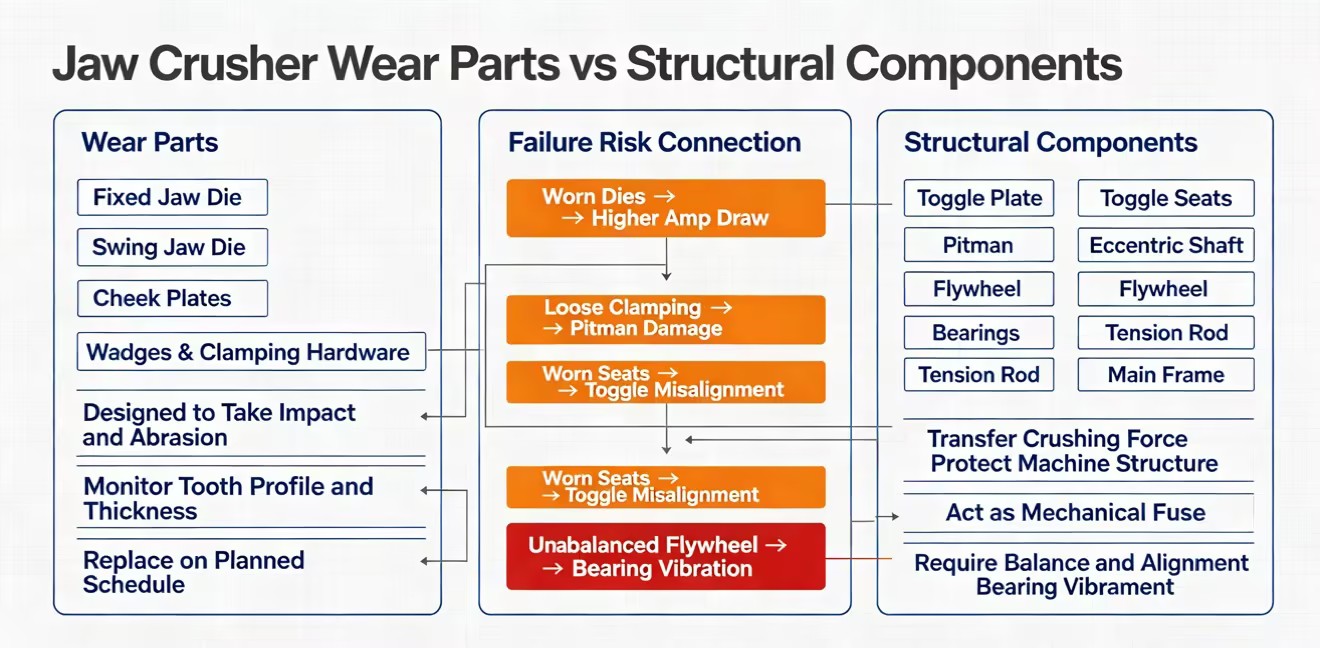
Jaw crusher parts can be divided into two main categories: wear parts and mechanical components. Wear parts directly contact the rock and require regular replacement, while mechanical components transfer power and protect the machine structure. Understanding these differences helps improve maintenance planning and spare parts management.
Jaw plates are the main wear components inside the crushing chamber. The moving jaw compresses material against the fixed jaw, and the tooth profile affects crushing efficiency. Corrugated profiles provide better grip for general rock, flat profiles suit highly abrasive materials, sharp profiles work well for recycling applications, and heavy-duty profiles handle high-impact conditions.
Manganese steel selection directly affects wear life. Common grades include 14%, 18%, and 22% manganese. Higher-impact materials require grades that can absorb strong impact, while highly abrasive materials need better wear resistance. The correct alloy must match the hardness and abrasiveness of the feed material to avoid premature wear.
Side guard plates protect the crusher frame from abrasion and should be replaced together with jaw plates when necessary. Proper fastening components, including bolts and wedges, keep the plates securely positioned. Using worn or low-quality fasteners can cause plate movement, damage the pitman, and increase maintenance costs.
The toggle plate transfers crushing force from the pitman and protects the crusher by acting as a safety component. It is designed to break when uncrushable materials enter the chamber, preventing damage to major parts. Worn toggle seats can cause misalignment and increase stress on the pitman and frame, so they should be inspected during replacement.
The pitman holds the moving jaw plate, while the eccentric shaft drives the crushing movement. These high-value components handle heavy loads and rely on proper wear part maintenance and bearing protection. Damage to the eccentric shaft can require major repairs and long equipment downtime.
Flywheels store and release energy during the crushing cycle, helping maintain smooth motor operation. They must remain properly balanced, as dust buildup or uneven weight distribution can create vibration and damage bearings. Regular cleaning and inspection help maintain stable operation.
Heavy-duty bearings support crushing loads, while springs and tension rods keep the toggle system properly engaged during operation. Loose or damaged components can create excessive vibration and accelerate wear on surrounding parts.
The main frame provides structural support for the entire crusher. Frame liners and replaceable wear components help absorb stress and protect the structure from direct impact. Regular inspections prevent cracks and costly repairs.
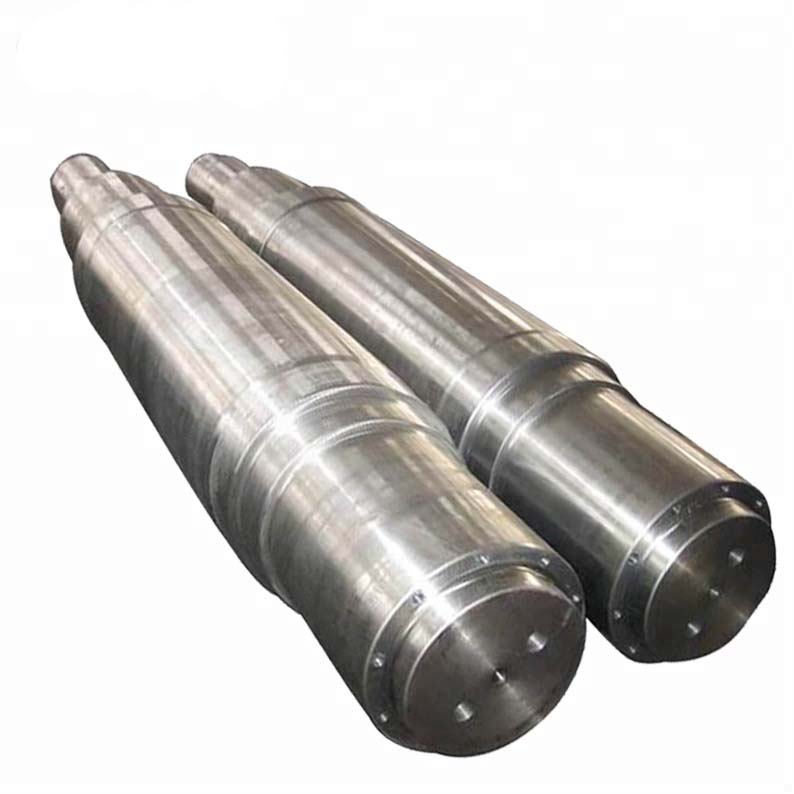
Choosing between OEM and aftermarket jaw crusher parts requires more than checking appearance. Suppliers should provide material test reports, dimensional inspection records, and quality certifications. Incorrect dimensions or poor heat treatment can cause poor fitting, uneven stress, and premature part failure.
Reliable aftermarket suppliers can provide customized jaw dies, including different tooth profiles and alloy options for specific rock types. These improvements can increase crushing efficiency and extend wear life compared with standard designs.
A qualified supplier should have stable production processes, consistent material quality, and reliable delivery capability. Check their inventory, lead times, manufacturing technology, and experience with similar quarry applications.
Request independent manganese steel test reports.
Verify proper heat treatment and quenching processes.
Check machining accuracy of mounting surfaces.
Confirm inventory availability and delivery capacity.
Review customer cases from similar crushing applications.
Replacing jaw crusher parts requires strict safety procedures. Proper preparation protects both operators and equipment. Rushing replacement work may lead to equipment damage or unexpected failures.
Before entering the crushing chamber, follow lockout/tagout procedures and secure all moving parts. Use proper lifting tools, inspect slings and chains, and clean all mounting surfaces before installing new jaw dies. Ensure full contact between the plate and mounting surface to prevent cracking or loosening.
Gaps between the jaw die and mounting surface can cause plate movement and stress cracks. Applying epoxy backing compound creates a stable support surface and helps prevent premature failure. Ensure the surface is clean and properly prepared before application.
Tighten jaw die bolts from the center outward to avoid plate deformation. After initial operation, stop the crusher and retorque the bolts to maintain secure installation. Regularly check the CSS, belt tension, lubrication, and component condition to keep the crusher operating efficiently.
Proper lubrication prevents bearing damage caused by excessive wear, overheating, or contamination. Avoid both over-greasing and insufficient lubrication. Regular vibration monitoring and grease inspection help identify early problems and prevent unexpected downtime.
| Maintenance Task | Frequency | Action Required | Risk of Neglect |
|---|---|---|---|
| Check Closed Side Setting | Daily | Measure gap and adjust shims or wedges | Oversized product, downstream overload |
| Inspect Toggle Plate & Seats | Weekly | Check for grooving, cracks, or misalignment | Pitman damage, loss of safety fuse |
| Grease Eccentric Bearings | Per OEM Schedule | Apply exact volume of specified grease | Thermal failure, blown labyrinth seals |
| Retorque Jaw Plate Bolts | After first 4 hours, then monthly | Tighten wedge bolts to specification | Plate flex, cracked manganese, damaged pitman |
| Vibration Analysis | Quarterly | Record bearing frequencies and compare to baseline | Unexpected catastrophic bearing failure |
Conduct a comprehensive wear audit of your current Jaw Crusher chamber to identify irregular wear patterns and baseline your current component lifespan.
Review your historical production data to pinpoint efficiency drops linked to worn components and establish a hard replacement schedule based on tonnage.
Initiate technical consultations with vetted parts suppliers to explore custom alloy upgrades tailored to your specific rock hardness.
Standardize your installation procedures to ensure full surface contact on all new plates and mandate a retorque schedule after the initial run-in period.
Implement vibration analysis and grease sampling to predict mechanical failures before they stop production.
A: The ideal material depends entirely on the rock's hardness and abrasiveness. Standard 14% manganese steel works well for general applications. Highly abrasive rock requires 18% or 22% manganese alloys. There is no universal best material. You must match the alloy to your specific feed material to maximize wear life.
A: You replace a toggle plate upon failure due to uncrushable tramp metal entering the chamber. You also replace it when the toggle seats show excessive wear. Worn seats alter the crushing geometry and reduce efficiency. Routine visual inspections determine when replacement is necessary.
A: Contamination from dust and grit destroys bearings quickly. Improper lubrication volumes—either too much or too little—cause thermal failure. Operating the crusher with a loose tension rod or an unbalanced flywheel also generates destructive radial loads that shatter bearing rollers.
A: Track your production tonnage against the reduction in plate thickness. Monitor the degradation of the tooth profile visually and with calipers. When the teeth flatten, the crusher loses grip, energy consumption spikes, and throughput drops. This indicates the plates need replacement.
A: OEM parts guarantee exact factory specifications and carry standard warranties. Aftermarket parts vary in reverse-engineering accuracy. However, premium aftermarket foundries often exceed OEM specifications. They offer custom performance upgrades and specialized alloys tailored to your specific crushing challenges.


