- All
- Product Name
- Product Keyword
- Product Model
- Product Summary
- Product Description
- Multi Field Search


Views: 0 Author: Site Editor Publish Time: 2026-02-27 Origin: Site


A jaw crusher is one of the most important machines in primary crushing operations. If you work in mining, quarrying, or aggregate production, understanding the three common types of jaw crusher machine can help you choose the right solution. In this guide, we break down Blake, Dodge, and Universal jaw crushers, explain how jaw crusher sizing works, and explore capacity factors. Whether you’re upgrading equipment or planning a new plant, this overview will help you make smarter decisions.
Jaw crusher machines are classified based on the position of the swing jaw pivot. This structural difference directly affects how the crusher handles material, controls discharge size, and performs under load. In practice, it also determines whether the machine is better suited for primary mining, laboratory use, or flexible multi-stage crushing.
Below are the three common types of jaw crusher machine used across mining and aggregate industries.
The Blake jaw crusher has its swing jaw pivoted at the top, which means the upper section remains relatively stationary while the lower portion moves during operation. It features a fixed feed area and a variable discharge area. As material moves downward in the chamber, the opening gradually narrows, allowing progressive size reduction.
This design was patented in 1858 and quickly became a milestone in mechanical crushing technology. Over time, it developed into the most widely used jaw crusher type in mining. Even today, many large primary crushing plants rely on this structure because it has proven stable and dependable.
Its crushing motion pushes material downward naturally. As the swing jaw compresses rock against the fixed jaw, fragments move deeper into the chamber where the space becomes tighter. This movement supports efficient primary crushing and allows the machine to accept large feed sizes without frequent blockages.
Strong and durable mechanical structure
Handles large feed sizes efficiently
Performs reliably in hard rock conditions
Suitable for continuous heavy-duty operations
Operators often choose it when processing granite, basalt, or metallic ores because it maintains stable output under demanding conditions.
Larger installation footprint
Heavier frame increases transport and setup cost
Less suitable for compact or mobile systems
Blake jaw crushers are commonly used for:
Granite crushing
Basalt processing
Hard ore reduction
Large-scale mining operations
The Dodge jaw crusher has its swing jaw pivoted at the bottom. In this design, the discharge opening remains fixed while the feed opening changes slightly during movement. This arrangement allows tighter control over final product size.
Because the lower section is fixed, material tends to accumulate near the discharge area. This gives it better size control, but it also increases the risk of choking under heavy loads. For this reason, it is not commonly used in modern high-capacity mining systems.
More uniform discharge size
Simple discharge adjustment
Compact structural design
It can be practical in controlled environments where feed size and volume are consistent.
Higher chance of material blockage
Limited processing capacity
Not suitable for heavy primary crushing
Dodge jaw crushers are mainly found in:
Laboratory applications
Research facilities
Small-scale crushing tasks
We rarely see them in large industrial mining plants today.
The Universal jaw crusher places its pivot at an intermediate position between the top and bottom. It combines characteristics of both Blake and Dodge designs, creating a more balanced crushing motion.
This middle pivot allows more even force distribution across the crushing chamber. Material flows smoothly while pressure is applied more uniformly. In some operations, this improves energy efficiency and reduces uneven wear on jaw plates.
Balanced crushing action
Improved force distribution
Flexible for different crushing stages
Reduced localized wear
It offers versatility in plants where both primary and secondary crushing may be required.
Slightly more complex mechanical structure
May require more detailed maintenance planning
Replacement parts can vary by manufacturer
Universal jaw crushers are often selected for:
Medium-hard rock processing
Aggregate production lines
Secondary crushing in certain plant designs
They work well when flexibility and balanced performance are priorities.
| Feature | Blake | Dodge | Universal |
|---|---|---|---|
| Pivot Position | Top | Bottom | Middle |
| Feed Opening | Fixed | Variable | Variable |
| Discharge Opening | Variable | Fixed | Variable |
| Capacity | High | Low | Medium |
| Risk of Choking | Low | High | Moderate |
| Primary Usage | Large Mining | Lab/Small Scale | Flexible Applications |
Even though the structural difference may look small, the pivot location changes how each jaw crusher machine performs in real-world operations.
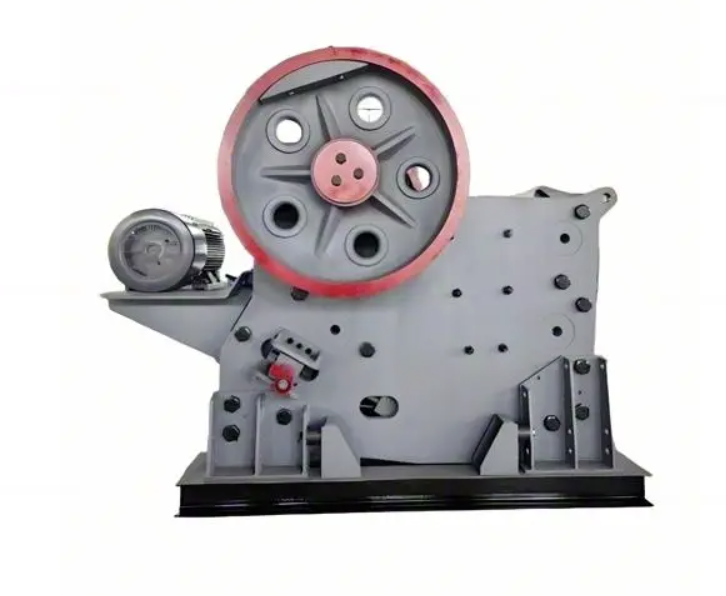
Sizing a jaw crusher machine is a technical decision, not a guess. We select it based on feed opening dimensions, required capacity, and material conditions. If the size is too small, it restricts production. If it is too large, it increases investment cost unnecessarily. So we need to understand how jaw crusher machines are classified in real projects.
When manufacturers describe jaw crusher size, they usually refer to two core measurements: the gape and the width of the jaw plates. These two numbers define how much material the machine can accept and process.
The gape is the distance between the fixed jaw and the swing jaw at the top of the crushing chamber. It determines the maximum rock size the crusher can handle. If the feed material exceeds this opening, it simply will not enter the chamber properly.
A larger gape generally means:
Bigger rock acceptance
Higher suitability for primary crushing
Better performance in mining operations
We always check the maximum feed size before making a selection.
The second important dimension is the width of the jaw plates, measured across the chamber from side to side. This width influences how much material can be processed at one time.
It directly affects:
Throughput capacity
Material distribution inside the chamber
Wear patterns on jaw liners
Wider plates usually allow higher production rates because they provide more crushing area.
Jaw crushers are typically labeled using a “gape × width” format. These dimensions may appear in imperial units (inches) or metric units (millimeters).
In this case:
32 inches refers to the feed opening width
54 inches refers to the jaw plate width
This size is commonly used in large primary crushing operations. It handles substantial feed material and supports high production demands.
600 mm represents the feed opening width
400 mm represents the jaw plate width
This model is more compact. It is often used in small quarries, recycling plants, or medium aggregate lines.
Below is a simplified comparison:
| Model Size | Feed Opening | Jaw Plate Width | Typical Application |
|---|---|---|---|
| 32 × 54 in | 32 inches | 54 inches | Large mining primary crushing |
| 600 × 400 mm | 600 mm | 400 mm | Small quarry or recycling |
We choose based on production scale, not just physical size.
Even if two jaw crushers share the same dimensions, their actual output may differ. Several operating factors influence real capacity in the field.
Oversized rocks reduce efficiency. Uniform feed improves performance. When blasting in mining operations, we try to control rock fragmentation so the crusher runs smoothly.
The crushing ratio compares the feed size to the final discharge size. Most jaw crushers operate between 6:1 and 8:1. If we demand too much size reduction in one pass, capacity may decrease.
The motor provides the mechanical force required for crushing. Higher power supports harder materials and larger feed. If power is insufficient, production slows and energy efficiency drops.
Rock hardness plays a major role. Granite behaves very differently from limestone. Abrasive materials increase liner wear. Moisture content also affects flow. Sticky material can reduce throughput and create buildup inside the chamber. When we size a jaw crusher machine, we look at all these factors together. Dimensions matter, but operating conditions matter just as much.
A: The three common types are Blake, Dodge, and Universal jaw crushers. They are classified based on the pivot position of the swing jaw. This structural difference affects crushing motion, discharge control, and application suitability.
A: The Blake jaw crusher is best for primary crushing. Its top pivot design handles large feed sizes efficiently and performs reliably in heavy-duty mining and quarry operations.
A: Blake crushers pivot at the top and have a variable discharge opening. Dodge crushers pivot at the bottom and have a fixed discharge opening, which increases choking risk.
A: Jaw plate lifespan depends on material hardness, abrasiveness, and operating conditions. In mining applications, they may last several weeks to months before replacement is required.
A: Yes, jaw crushers are well suited for crushing hard rocks such as granite, basalt, and other abrasive materials in primary crushing stages.
Choosing the right jaw crusher is not just about size or power. It’s about matching machine design, feed conditions, and production goals. From pivot position to capacity factors, every detail affects long-term performance. When you understand how each jaw crusher type works, you reduce downtime and improve output consistency.
At AXSON, we help clients select and configure jaw crusher solutions built for real production demands. Whether you need primary crushing for hard rock or a flexible aggregate setup, our team is ready to support your project with reliable equipment and technical expertise.


