- All
- Product Name
- Product Keyword
- Product Model
- Product Summary
- Product Description
- Multi Field Search


Views: 0 Author: Site Editor Publish Time: 2026-02-27 Origin: Site


A jaw crusher is one of the most essential machines in primary crushing operations. If you’ve ever wondered what is a jaw crusher and how a jaw crusher works in mining or aggregate production, you’re in the right place. In this guide, we break down the jaw crusher working principle, key components, crushing stages, and motion design in simple terms. By understanding its structure and operation, you can choose the right equipment for better efficiency, durability, and output control.
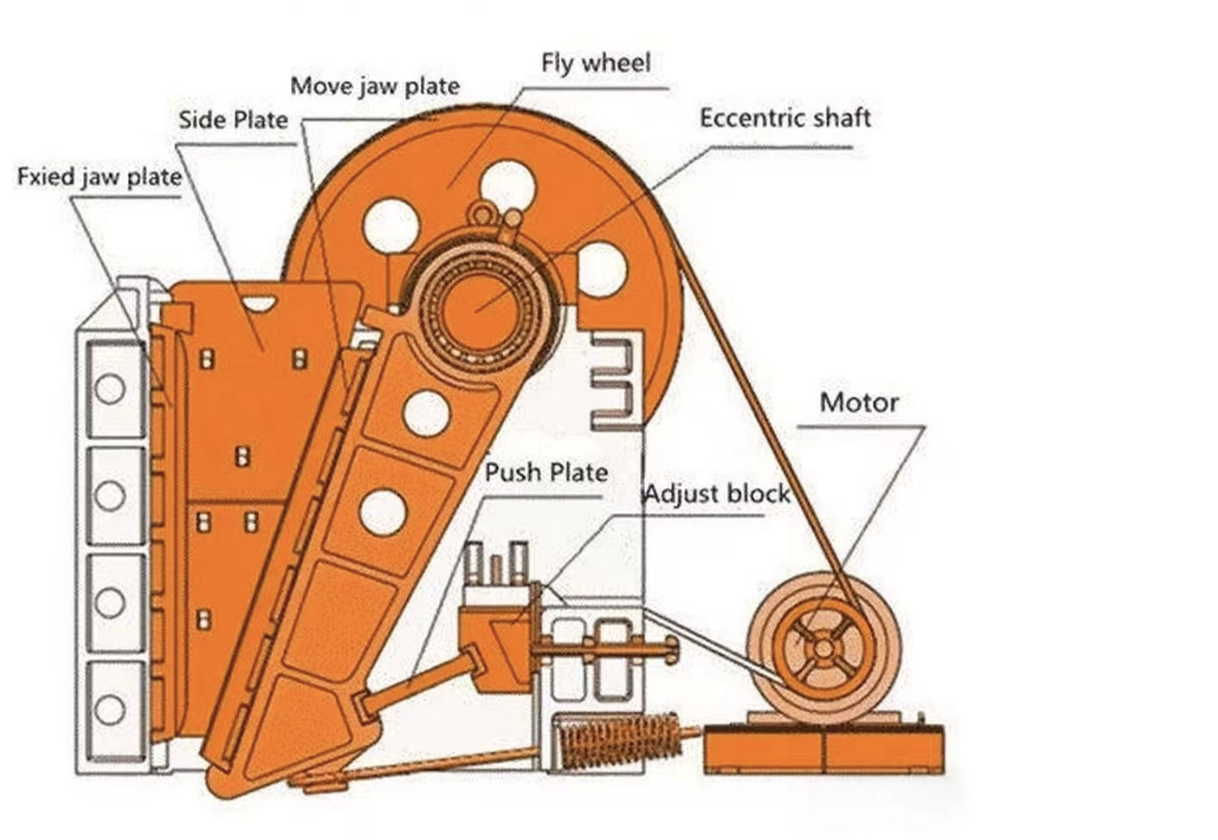
To understand how a jaw crusher works, we need to know its core parts. Each component plays a mechanical role. They work together as one system.
The fixed jaw remains stationary during operation. It is mounted directly to the crusher frame. It provides one of the two crushing surfaces. A replaceable liner plate covers its surface. These liners often have corrugations. The grooves improve grip. They prevent rock from sliding upward during compression.
Key features include:
Rigid mounting to the frame
Replaceable wear liners
Corrugated surface for better traction
Designed for heavy compressive loads
It does not move. It absorbs force from the swing jaw.
The moving jaw performs the actual crushing motion. It attaches to the pitman. As the pitman shifts, it drives this jaw forward and backward. Its motion follows a curved path. Not a straight line. The lower portion moves more than the upper section. This arc-like movement helps pull material downward after each stroke.
Important characteristics:
Connected directly to the pitman
Holds replaceable jaw liners
Moves in a reciprocating arc
Applies compressive force against fixed jaw
It opens. It closes. It repeats the cycle continuously.
The pitman acts as the driving link between the eccentric shaft and the swing jaw. It converts rotary motion into reciprocating motion. When the eccentric shaft rotates, the pitman moves up and down. That vertical motion transfers to the swing jaw. Without the pitman, there would be no crushing cycle.
Its design must handle high stress. It supports the weight of the swing jaw. It also absorbs dynamic loads during compression.
The toggle plate transfers force from the pitman to the swing jaw. It forms part of the linkage system. It also works as a safety device. If uncrushable material enters the chamber, extreme pressure builds quickly. The toggle plate may crack first. This controlled failure protects the main frame and shaft.
Functions of the toggle plate:
Transmits crushing force
Maintains jaw movement geometry
Acts as overload protection
Supports bottom of swing jaw
Operators often inspect it during routine maintenance.
The eccentric shaft generates the crushing motion. It rotates continuously when powered by the motor. Its offset design creates uneven rotation. That offset causes the pitman to move vertically. Once it moves, the swing jaw follows. Precision matters here. Even small imbalance increases vibration. Proper alignment reduces bearing wear. It also improves efficiency.
The flywheel stores kinetic energy during idle rotation. It releases energy during the crushing stroke. This energy balance keeps operation smooth. It reduces power fluctuation. It also prevents sudden motor overload.
You can think of it as an energy buffer. It stabilizes the system. It keeps rotation steady even under heavy load.
Main benefits:
Maintains constant speed
Reduces shock load
Improves energy efficiency
Supports smoother crushing cycles
The frame forms the structural base of the machine. It supports all components. It must resist high compressive forces. Heavy-duty cast steel or welded construction is common. This ensures rigidity. It prevents deformation during operation. Bearings support the eccentric shaft. They allow smooth rotation. They also absorb vibration generated during crushing.
Component roles:
| Component | Main Function | Operational Impact |
|---|---|---|
| Frame | Structural support | Maintains alignment |
| Bearings | Shaft rotation support | Reduces friction |
| Housing | Protects moving parts | Improves durability |
If alignment shifts, performance drops quickly. Regular lubrication helps extend bearing life. Proper structural integrity ensures stable crushing performance.
The process begins at the top opening, which we call the gape. Large rocks enter this space directly from a hopper or feeder, and gravity helps pull them into the crushing chamber. In most operations, a vibrating feeder regulates the flow. It spreads the material evenly across the width of the opening and prevents sudden surges that could overload the machine.
Feed size plays a critical role in performance. As a general guideline, the maximum rock size should not exceed about 80% of the gape width. When oversized material enters, it may bridge across the opening or reduce crushing efficiency. Operators usually aim for steady, consistent feeding because it improves capacity and reduces uneven wear on the jaw plates.
Key feeding considerations include:
Maintain uniform feed distribution
Avoid oversized rocks beyond the 80% rule
Prevent material buildup at the inlet
Ensure proper feeder speed control
Inside the machine, you’ll find a V-shaped crushing chamber. This design narrows toward the bottom, guiding material downward as it becomes smaller. Two jaw plates form this chamber: one is fixed to the frame, while the other—called the swing jaw—moves back and forth.
As rocks travel downward through the chamber, they undergo progressive size reduction. The upper portion handles larger feed pieces, while the lower section determines the final output size. Crushing does not occur instantly. Instead, it happens gradually as material passes through successive compression cycles.
Main chamber features:
V-shaped cavity for efficient material flow
Replaceable jaw liners for wear resistance
Narrowing geometry to control final size
Designed to prevent clogging under normal load
A jaw crusher works using compressive force. It does not grind or shear rock. Instead, it squeezes material between two rigid surfaces.
The crushing motion starts when an electric motor rotates the drive pulley. This rotation turns the eccentric shaft, which causes the pitman to move. As the pitman shifts, it pushes the swing jaw forward and pulls it backward in a reciprocating motion. When the jaw moves forward, it compresses rock against the fixed jaw. When it retracts, the material shifts downward.
The toggle plate transfers force from the pitman to the swing jaw. It also serves as a protective component. If uncrushable material enters the chamber, the toggle plate may fail first, which helps prevent major structural damage.
Core mechanical elements involved:
Eccentric shaft generates motion
Pitman converts rotary motion into linear movement
Toggle plate transmits force
Swing jaw applies compression
When the moving jaw presses material against the fixed jaw, internal stress builds inside the rock. Once that stress exceeds the material’s compressive strength, cracks begin to form. These cracks spread along natural weaknesses such as grain boundaries or micro-fractures.
Crushing rarely completes in a single stroke. Rocks vary in density and structure, so they require multiple compression cycles before they break completely. Each cycle weakens the material further until it fractures into smaller pieces.
The flywheel plays an important supporting role. It stores kinetic energy during the idle part of the cycle and releases it during the crushing stroke. This stabilizes rotation and ensures smooth operation even under heavy load. Without the flywheel, power demand would fluctuate sharply.
After sufficient size reduction, crushed material exits through the bottom opening of the chamber. The final particle size depends primarily on the Closed Side Setting (CSS), which refers to the smallest gap between the jaws during the crushing cycle.
Adjusting the CSS changes product size and capacity. A smaller setting produces finer output but may reduce throughput and increase wear. A larger setting increases capacity but results in coarser material.
| CSS Adjustment | Output Size | Production Impact |
|---|---|---|
| Smaller CSS | Finer | Lower capacity, higher wear |
| Larger CSS | Coarser | Higher capacity, lower fines |
As the swing jaw retracts, gravity pulls the crushed material downward. It falls through the discharge opening and onto a conveyor or into the next processing stage. The cycle then continues as long as feed material enters the machine.
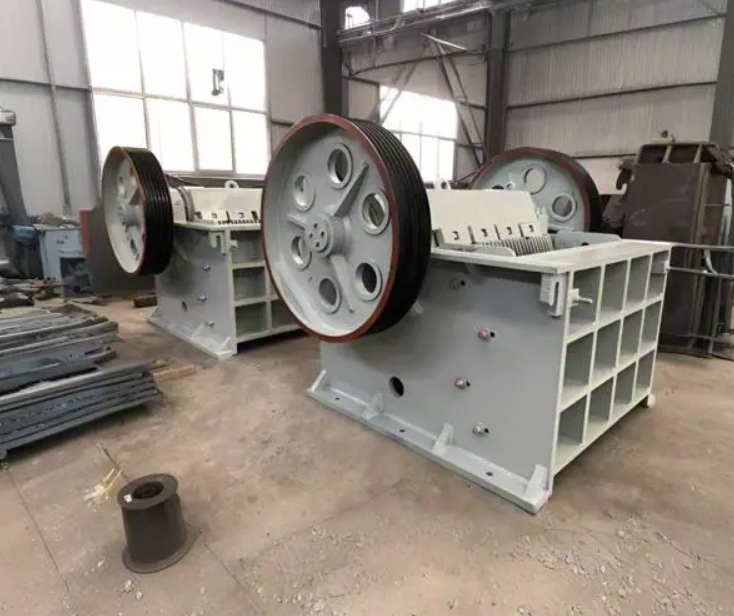
To really understand how a jaw crusher works, we need to look beyond basic compression. Its performance depends on motion, geometry, and material flow. Each movement inside the chamber affects capacity, wear, and product size.
At the center of the system is reciprocating motion. The swing jaw moves forward and backward in a repeated cycle. It never spins fully. It pushes. Then it pulls away.
We usually describe the motion in two parts:
Upstroke
The swing jaw moves toward the fixed jaw
The crushing chamber narrows
Material gets compressed
Downstroke
The swing jaw moves away
The chamber opens
Crushed material drops downward
This opening and closing cycle happens many times per minute. It allows gradual reduction instead of sudden impact. You can imagine it like a large mechanical nutcracker. We squeeze. We release. We repeat. Each squeeze weakens the rock further. The timing of this cycle affects efficiency. Faster speed increases capacity. Too fast may increase wear.
The swing jaw does not move in a simple straight line. Its path combines vertical and horizontal components. This detail matters more than many people think.
In single-toggle jaw crushers, the motion is elliptical. The top of the jaw moves in a small arc. The bottom moves in a larger arc. This creates more vertical movement near the discharge zone.
In double-toggle jaw crushers, the motion looks more like a pendulum. The swing jaw pivots from a fixed point. It produces stronger compressive force but less vertical sliding.
Here is a simple comparison:
| Design Type | Motion Pattern | Wear Level | Efficiency Focus |
|---|---|---|---|
| Single-Toggle | Elliptical | Higher | Higher capacity |
| Double-Toggle | Pendulum-like | Lower | Heavy-duty work |
More vertical movement increases sliding action along the jaw plates. Sliding improves material flow. It also increases liner wear. Engineers balance these factors during design. When we choose a crusher, we consider material hardness. Abrasive rock favors controlled motion. Softer stone allows faster cycles.
The angle between the fixed and moving jaws is critical. We call it the crushing angle. If it becomes too steep, material may slip upward instead of breaking. If it becomes too narrow, flow slows down.
Jaw plate design supports proper grip. Corrugated liners help hold rock in place during compression. They reduce upward sliding. They improve breakage efficiency. A well-designed chamber prevents choking under normal load. Non-choking design allows material to move downward smoothly after each stroke.
Feeding method also affects material flow:
Choke Feeding
Chamber remains nearly full
Higher throughput
Better particle shape
More liner wear
Regulated Feeding
Controlled material depth
Lower stress on components
Easier adjustment of product size
When feed spreads evenly across the width, performance improves. Uneven loading causes localized wear. It also reduces crushing efficiency. The interaction between motion and angle determines how rock travels through the chamber. It enters large. It exits controlled. Every stroke influences how smoothly it moves downward.
A: It reduces large rocks by compressing them between a fixed jaw and a moving jaw. The moving jaw swings back and forth, crushing material during the closing stroke and releasing it during the opening stroke.
A: The Closed Side Setting (CSS) determines the final product size. A smaller CSS produces finer output, while a larger CSS results in coarser material.
A: Yes. Jaw crushers are designed to crush hard and abrasive rocks using strong compressive force and heavy-duty components.
A: The flywheel stores rotational energy and releases it during crushing, ensuring smooth operation and reducing shock loads on the motor.
Now you’ve seen how each part inside a jaw crusher contributes to powerful, controlled rock reduction. From the crushing chamber to the CSS adjustment, every detail affects capacity, wear life, and product size. When you understand these mechanics, equipment selection becomes much easier.
At AXSON, we focus on reliable jaw crusher solutions built for demanding applications. Whether you need primary crushing support or customized configurations, our team is ready to help you optimize performance and reduce downtime.


